

Discover the Villages, Traditions, and Authentic Life of Naxos Beyond the Beaches
You visit the coast to see Greece, but you visit the inland villages to feel Greece.
A Different Kind of Arrival
Travel, at its most meaningful, is not measured in miles but in understanding. It is less about distance and more about perspective.
Some journeys lead us to places designed for visitors—beautiful, polished, ready to welcome the world. Others lead somewhere quieter, where life was never rearranged for tourism and continues to unfold as it always has.
Naxos offers both.
Along the coastline, long stretches of golden sand meet the endless blue of the Aegean. It is easy to understand why so many travelers stop there. The sea invites you to pause, to rest, to admire the horizon.
But those who travel with curiosity—those who look beyond the obvious—often discover that the true spirit of the island lives elsewhere.
It lives inland.
To step into the inland is to enter a world where authenticity is the only currency and “slow living” is a century-old habit, not a modern trend.
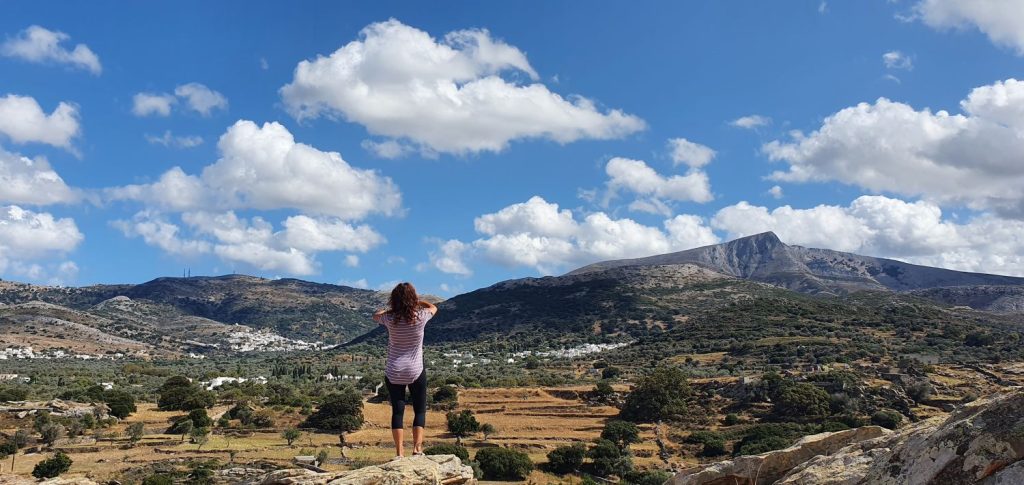
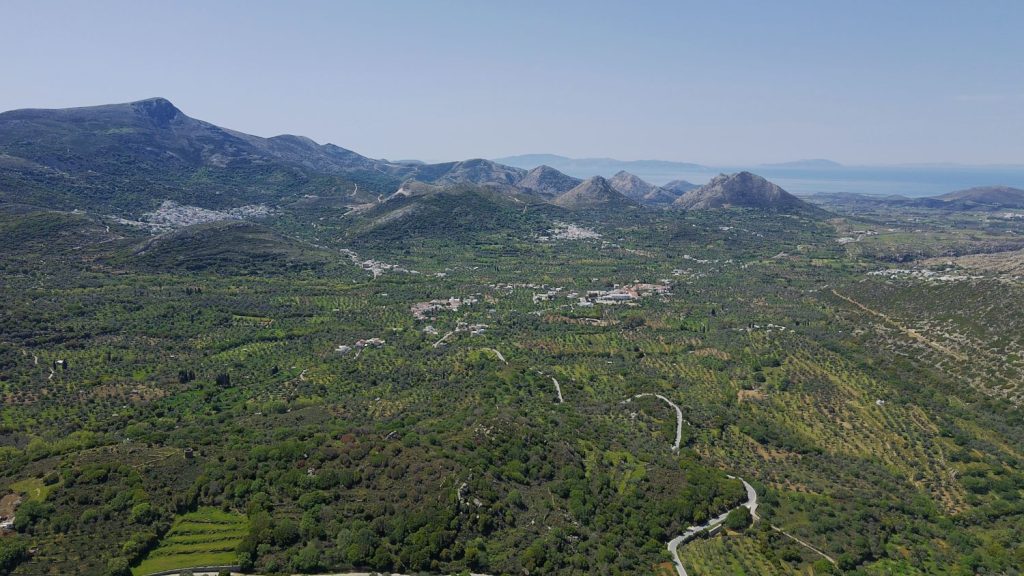
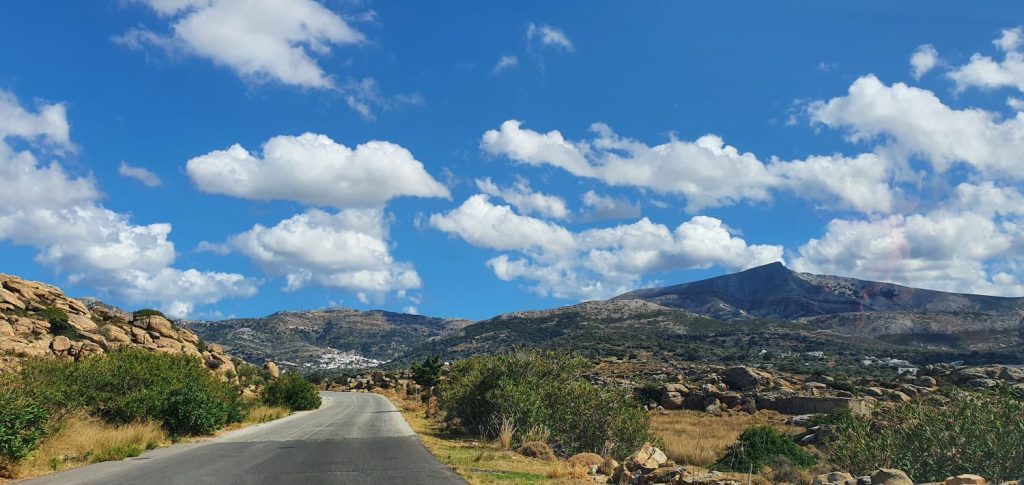
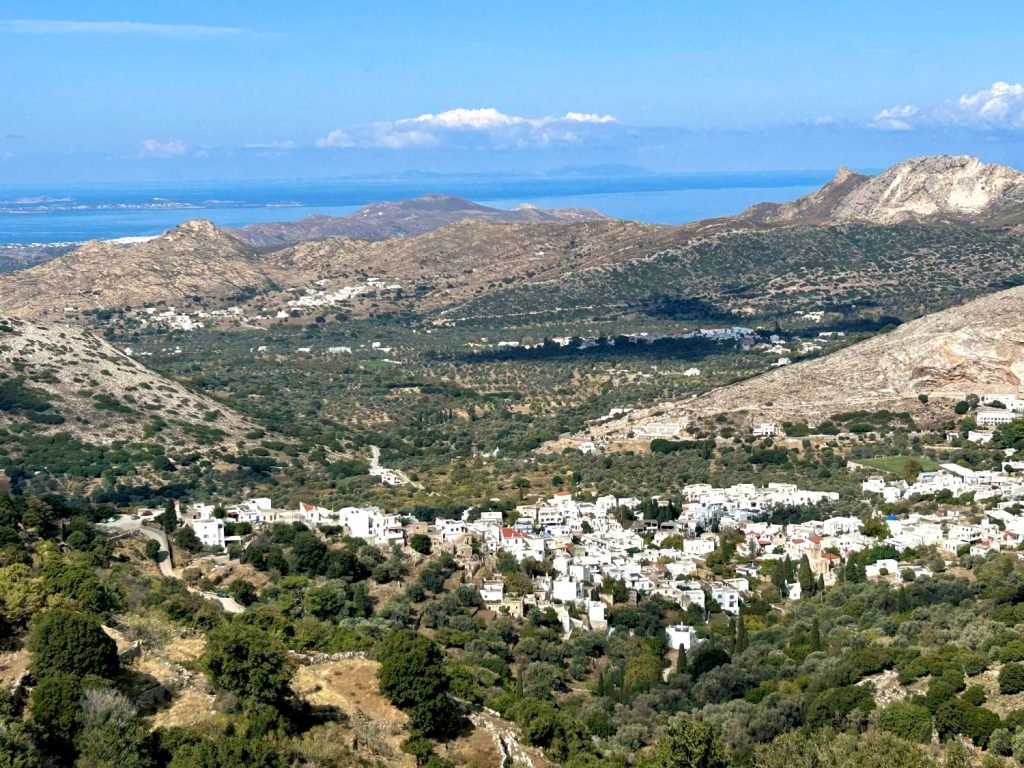
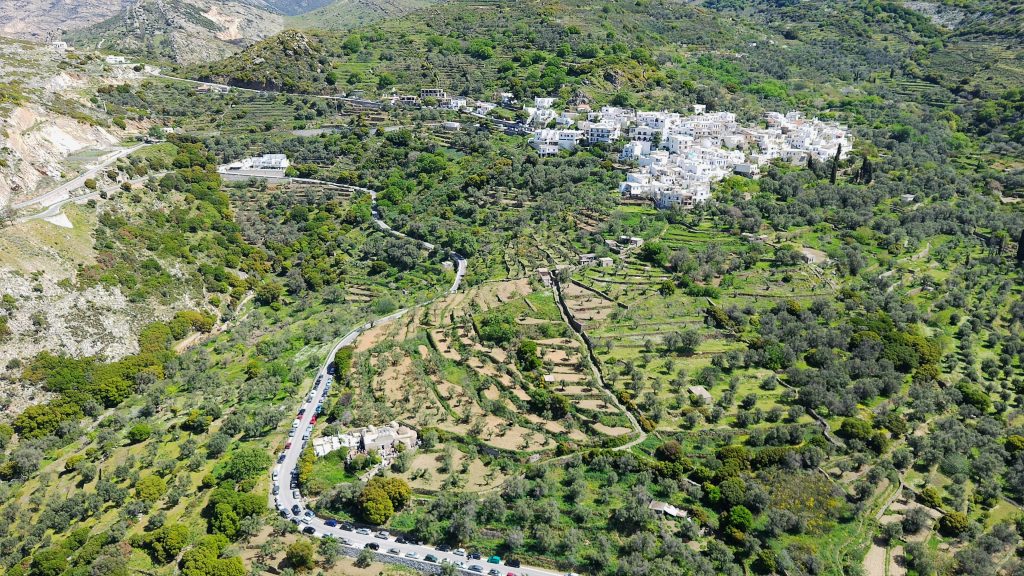
Beyond the beaches, the terrain begins to rise. Roads wind through valleys and terraced hillsides until they reach villages that seem to exist slightly outside of time. Here, the rhythm of life follows older patterns shaped by seasons, harvests, and the quiet wisdom of generations.
For the traveler seeking more than scenery, the mainland of Naxos reveals something rare. A place where authenticity is not preserved for visitors.
It is simply lived.
A Day in a Naxian Village
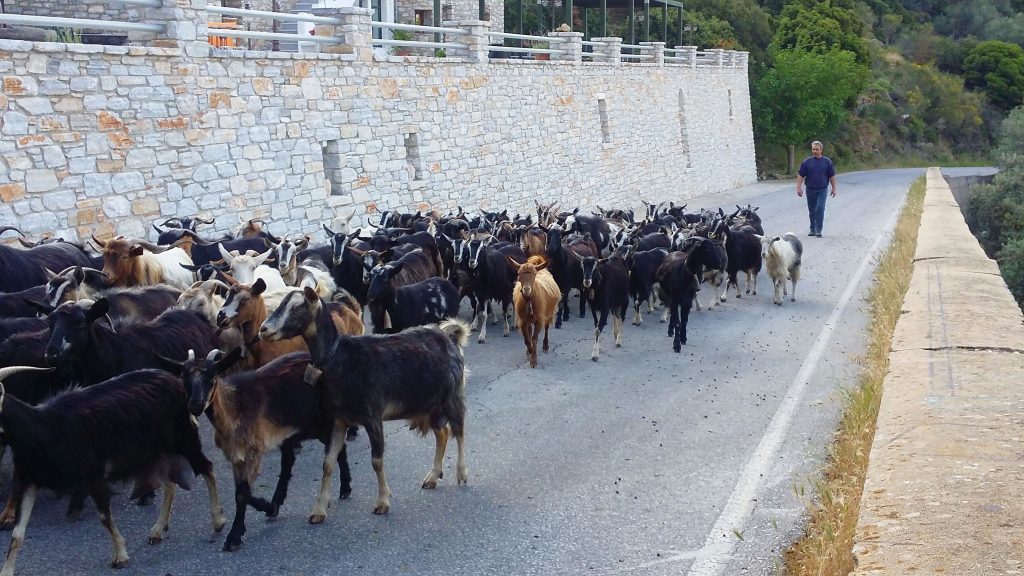
Morning begins softly. The first sounds are the bells of goats moving across the hillsides. A shepherd walks slowly through the valley while the sun climbs over the mountains.
Coffee brews in small kitchens. Windows open. Someone sweeps the stone path outside their home.
By midday, farmers return from their fields carrying baskets of vegetables, herbs, or olives. Lunch is simple and generous—fresh bread, local cheeses, tomatoes from the garden, olive oil pressed nearby, and wine.
In the afternoon, the village pauses for mesimeri, the traditional midday rest. Streets grow quiet as homes welcome the cool shade.
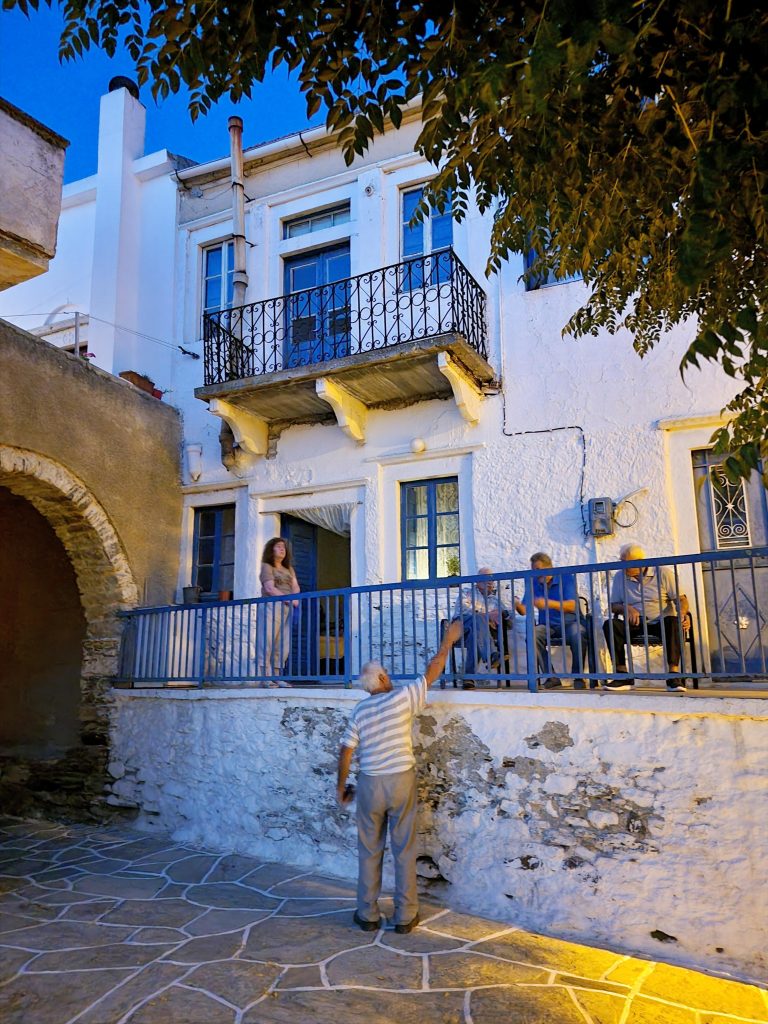
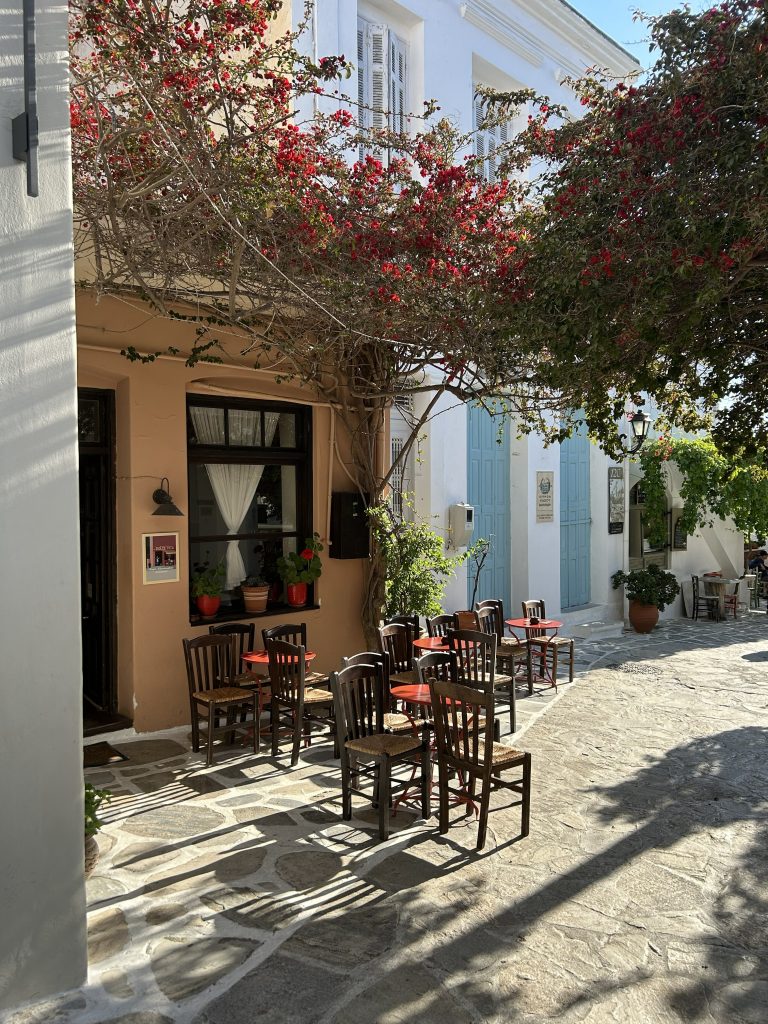
Later, life returns to the squares. The kafenio fills slowly with conversation. Backgammon boards open. Greek coffee arrives in small cups.
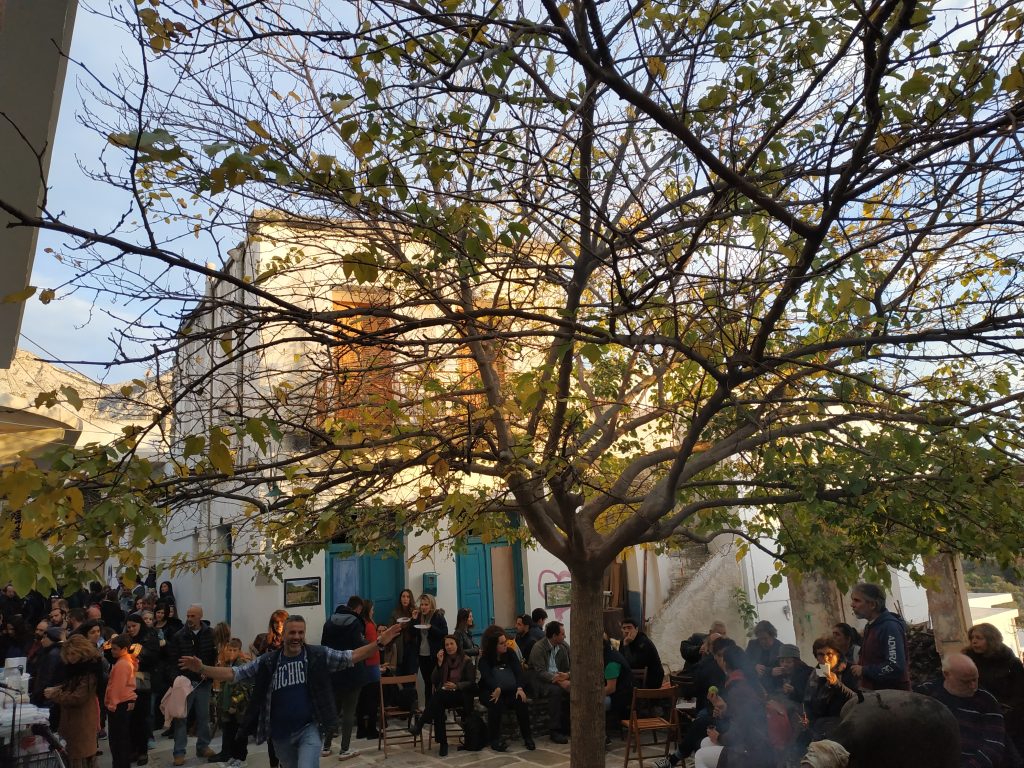
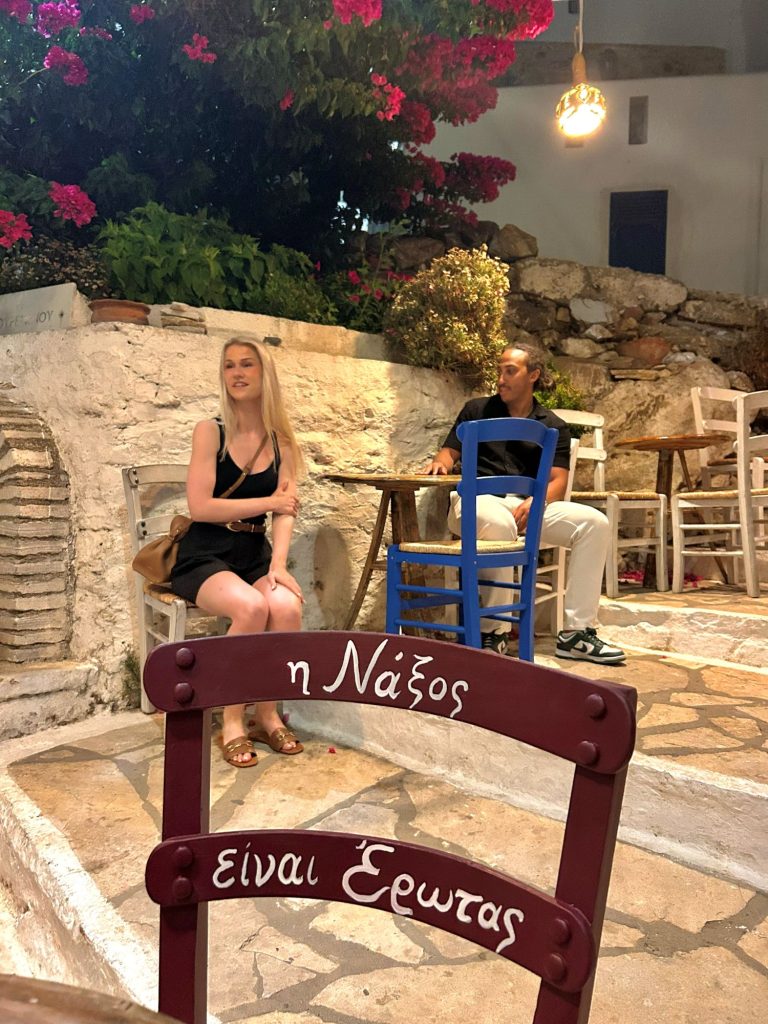
As evening falls, the village changes again. Tables appear outside. Music may begin. Laughter travels through the narrow streets.
And without any plan, the night becomes a gathering.
The Guardians of the Land: Shepherds and Farmers
The inland landscape of Naxos is not accidental. It is the result of centuries of patience between people and land.
High above the valleys, shepherds move across granite slopes with a quiet familiarity that cannot be learned quickly. They know the terrain through memory and inheritance.
If you pause long enough in the mountains, you may hear the distant chime of goat bells drifting through the wind—a sound that defines the silence of the highlands.
From the milk of these animals come some of Greece’s most celebrated cheeses, including graviera and arseniko, and other traditional varieties produced with techniques that remain deeply rooted in tradition.
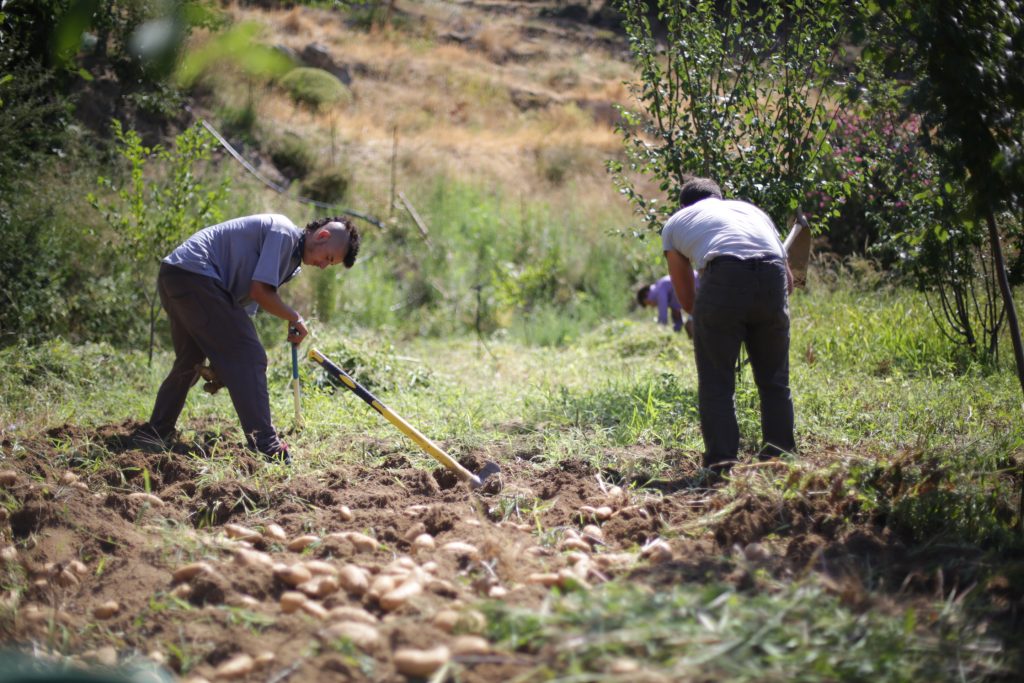
Below the mountains, farmers cultivate the fertile valleys that make Naxos unique among the Cycladic islands. Potatoes, olives, figs, grapes, and herbs grow in small plots carefully carved into the landscape.
In villages such as Moni and Chalki, the concept of “farm-to-table” never needed explanation.
It has always been simply called dinner.
Artistry in Motion: The Quiet Crafts of the Island
The inland is a sanctuary for those who still create with their hands. Beyond agriculture, the mainland villages preserve another kind of knowledge: the art of making things slowly.
Winemakers cultivate small vineyards scattered across the hillsides, allowing the grapes to reflect the specific soil and sunlight of the region. Most wines remain within the island, shared among families and guests rather than exported.
Inside village workshops, older crafts continue quietly.
Potters shape the island’s clay into vessels both practical and symbolic, following movements that have changed little over centuries.
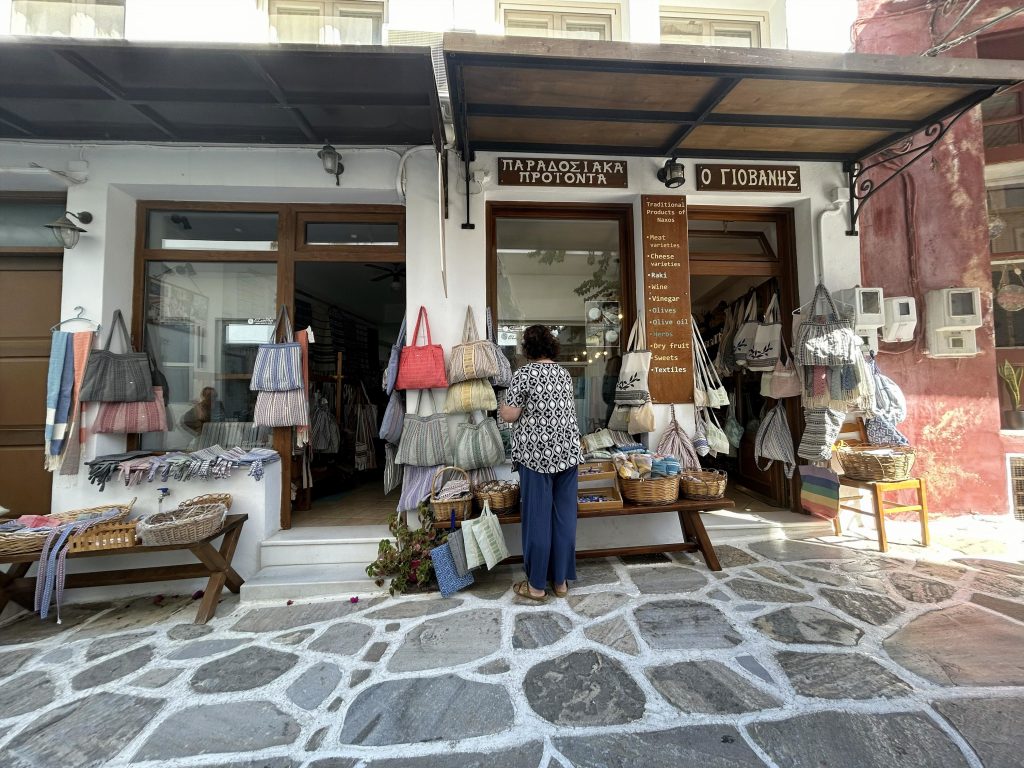
In villages like Moni, the rhythmic sound of wooden looms still echoes through most homes. Textiles emerge thread by thread, their patterns carrying stories of place and heritage.
These crafts are not preserved as museum traditions. They remain part of everyday life.
The Soundscape of the Island
Every place has its sounds. In the mainland of Naxos, the soundtrack is unmistakable.
The chime of goat bells moving across the hillsides. The rhythmic clack of a loom weaving thread into cloth. The wooden knock of backgammon pieces on a café table. Cicadas sing in the olive trees all day long.
And later at night—music drifting across a village square, accompanied by laughter and the clinking of glasses.
These sounds are small, almost ordinary. Yet together they form the living rhythm of the island.

The Invitation: The Greek Parea
Visitors in the villages of Naxos rarely remain strangers for long.
A simple greeting can quickly become an invitation. “Come, sit with us.” A glass of wine appears. A plate of food arrives. Conversation begins.
This is the Greek parea—a gathering of friends and neighbors sharing time together.
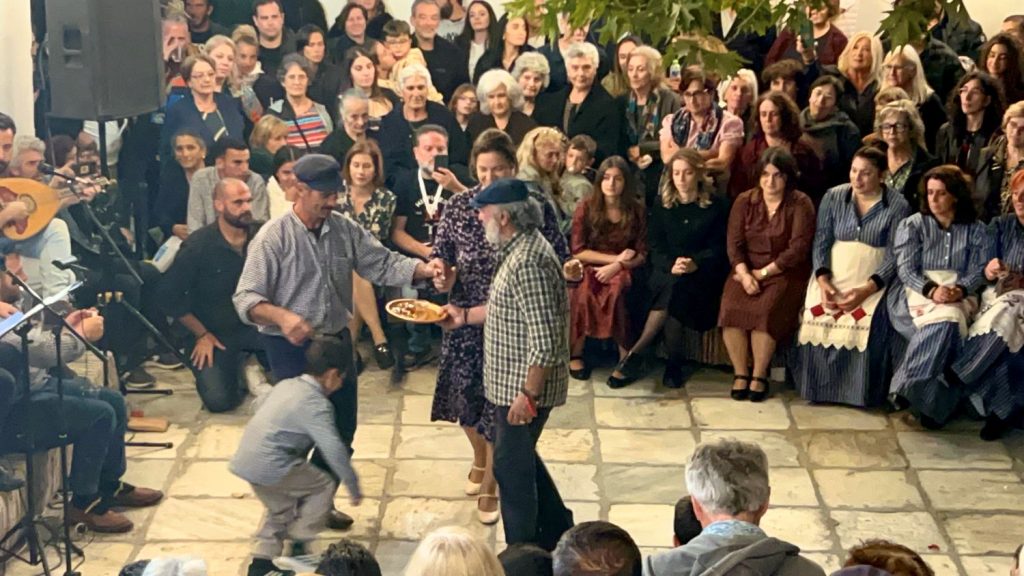
In many villages, evenings unfold naturally this way. Someone brings a violin or lute. Someone else opens a bottle of homemade wine or raki. Music begins. Stories grow louder. Laughter spreads across the square.
Soon people are dancing—not for an audience, but simply because the moment invites it.
In Moni village, this spirit is especially alive. During the summer months, gatherings happen almost every evening. Locals fill the streets, music drifts through the village, and visitors are often welcomed into the circle as if they had always belonged there.
Nothing is scheduled. It simply happens.
The Sacred Pause: Mesimeri
In the villages of Naxos, time is perceived differently, and the afternoon brings a particular quiet. The most authentic way to live like a local is to honor the afternoon rest. Between 3:00 PM and 5:30 PM, the villages go silent. This is the Mesimeri.
During the warmest hours of the day, life slows into the traditional pause known as mesimeri. Shops close, streets empty, and the island rests briefly under the sun.
Later, as the heat softens, the village kafenio begins to fill. Small tables appear in the shade. Greek coffee arrives in tiny cups. Someone opens a backgammon board, and the familiar clack of wooden pieces echoes across the square.
The game itself is only part of the ritual. Conversation is the real event. Stories are exchanged, debates unfold, and laughter rises easily among neighbors who have known one another their entire lives.
In these simple moments, the rhythm of community continues—unhurried, unfiltered, deeply human. This ritual of connection is how the Naxian people sustain their community; it is a celebration of the present moment.
Sustainability Before the Word Existed
What the modern world now calls sustainable living, the people of Naxos have practiced for generations.
Food is seasonal because the land decides when it grows.
Resources are respected because nothing should be wasted.
Neighbors support one another because community has always been the strongest form of security.
Long before sustainability became a global conversation, it was already quietly practiced here. Not as a philosophy. But as a way of life.
For the Traveler Seeking Something More
Not every traveler looks for the same experience. Some seek relaxation. Others seek discovery.
But an increasing number of people travel with intention—to understand how other communities live, to reconnect with the origins of food and culture, and to experience places where life still moves at a human pace.
For those travelers, the villages of Naxos offer something increasingly rare. They offer authenticity without performance.
Here, the island reveals itself gradually: in the sound of goat bells across a valley, in a glass of homemade wine shared at a village table, in the slow afternoon rhythm of the kafenio.
It is not a spectacle. It is simply life.
And sometimes, the most meaningful journeys begin exactly there.
Where the Journey Naturally Begins
High above the fertile valleys of the Naxian mainland, where villages like Moni continue to live according to these rhythms, there is a place that shares the same spirit.
From here, the island reveals itself gradually.
Sometimes through a conversation that leads to a hidden vineyard.
Sometimes through a spontaneous village gathering you would never find it on a map.
Sometimes through a story shared late in the evening over a glass of local wine.
Spontaneity is part of life here. And it is part of the experience.
Because the most meaningful travel moments are rarely planned. They are discovered.
A Closing Thought
The beaches of Naxos may first capture your attention. But the villages quietly capture your heart.
And somewhere between a mountain path, a shared table, and the sound of music drifting through a summer night, you may realize something unexpected: You did not simply visit Naxos. For a moment, you lived it.
Explore the Villages of Naxos from ELaiolithos
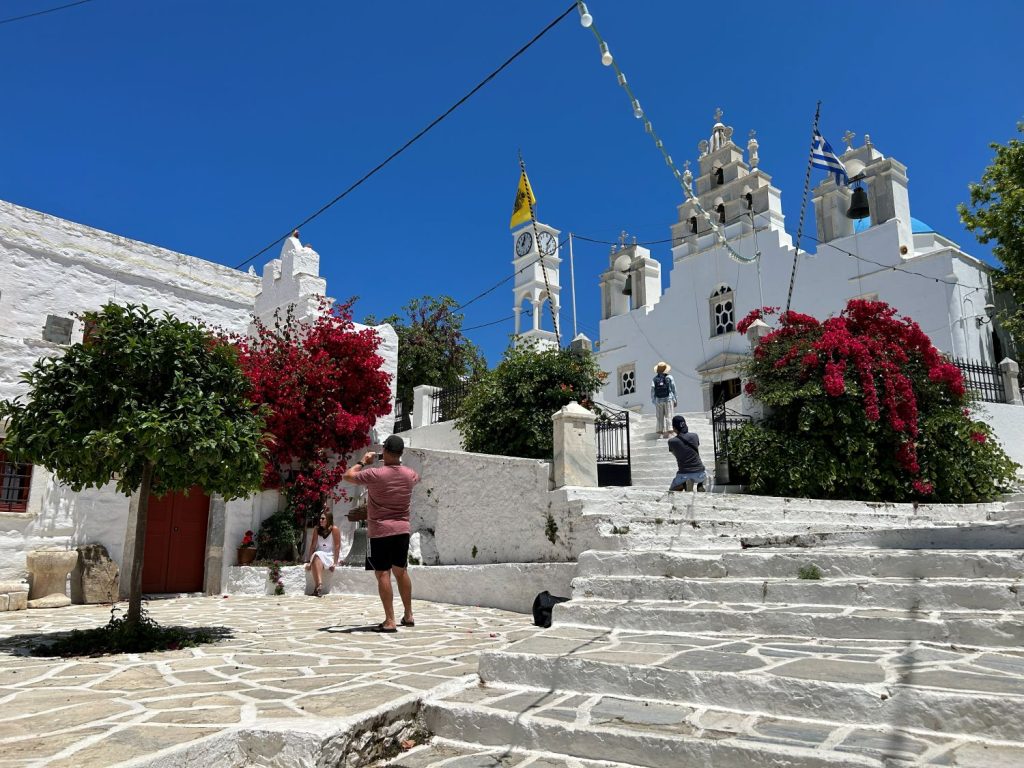
Perched above the fertile valleys of the Naxos mainland, ELaiolithos offers direct access to some of the island’s most authentic villages, including Moni village, where traditions, music, and community life continue to thrive. It is a life of zero waste, of eating within a 5km radius, and of valuing human connection over consumption.
FAQ
What Is the Most Authentic Way to Experience Naxos?
To experience Naxos authentically, you must leave the well-trodden coastal path and move toward the island’s mountainous center. While the beaches are beautiful, the “Real Naxos” is found in the inland, where the culture is defined by ancient agriculture, hand-crafted traditions, and a social pace that has remained unchanged for decades.
Why Visit the Villages of Naxos?
Because the coast is for your tan, but the villages are for your soul. To visit the villages of Naxos is to move beyond the postcard-perfect beaches and step into the authentic heartbeat of the Cyclades. While the coast offers relaxation, the “Inland” offers a connection to a way of life that has remained remarkably unchanged for centuries.
To see the “Marble Village” of Apeiranthos, the neoclassical elegance of Halki, and the weaving looms of Moni. You visit to see a culture that is still creating, not just consuming.
How Can You Discover the Hidden History of Naxos?
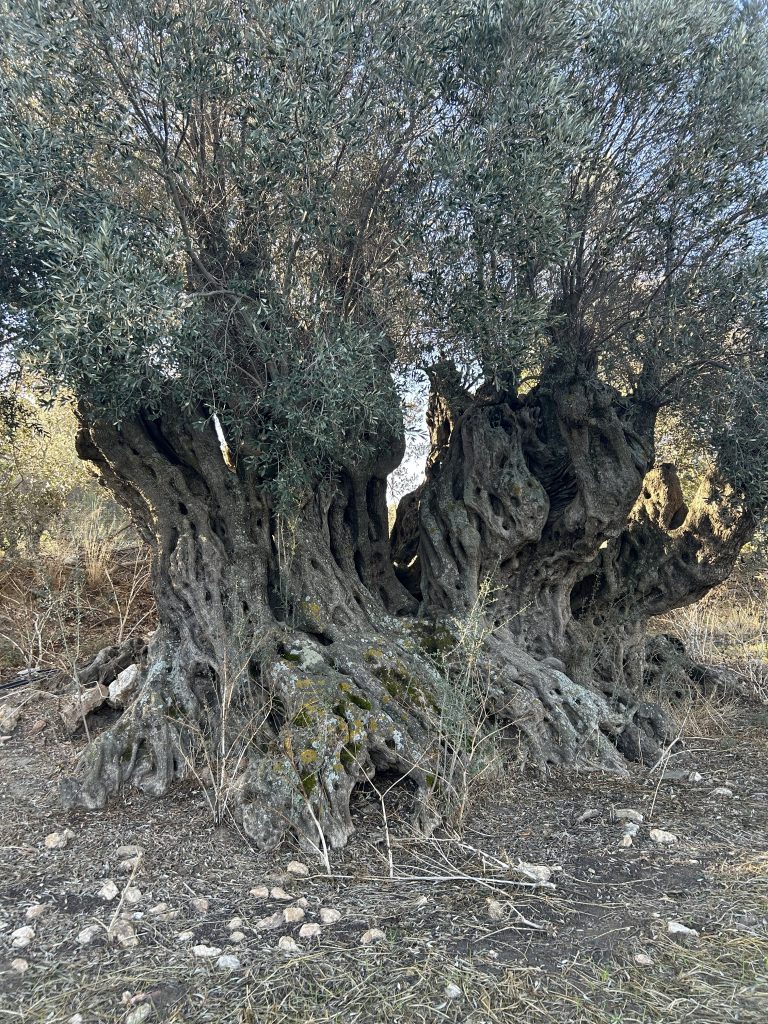
By stepping onto the Gateway to the Ancient Path. The inland villages are linked by a network of ancient footpaths (monopatia). Walking from village to village—such as the trail from Moni to Halki to Kaloxylos—is the only way to see the hidden Byzantine churches with 1,500-year-old frescoes, abandoned emery mines, and olive groves that have stood for millennia.
What Secrets Lie Along the Ancient Footpaths of the Inland?
The villages are more than just destinations; they are the Gateway to the Ancient Path. Connected by a network of stone-paved monopatia, these trails offer the only access to the island’s ‘living museum.’ As you walk from Halki to Moni, you encounter hidden Byzantine churches with 1,000-year-old frescoes and olive groves that have watched the centuries pass.
How Does the Inland Change the Way You Travel?
You arrive as a tourist; you leave as a local. Visiting the interior forces you to slow down. It teaches you the value of sustainable living and intentional connection. You don’t just “see” Naxos; you start to feel its rhythm. By the time you leave ELaiolithos, your perspective on “luxury” has shifted from expensive things to authentic experiences.
Insider Tip: The Golden Hour Ascent
To truly feel the magic of the monopatia, start your walk in the late afternoon, about two hours before sunset. As the heat of the day fades, the “inland” is bathed in a soft, honey-colored light that makes the marble paths glow. Not only will you avoid the midday sun, but you’ll arrive in the next village just as the Kafenios are coming to life—the perfect moment to reward your hike with a chilled glass of local wine or a fresh citron cocktail.