


Most journeys to the Cyclades begin with the sea. Harbors, beaches, and the shimmering Aegean shape the image of island life. Yet in Naxos, something unexpected reveals itself once the road leaves the coastline and begins to climb.
The island opens upward.
Within minutes, the landscape transforms. The bright coastal horizon gives way to mountains, terraces, springs, and deep green valleys where life follows rhythms far older than tourism. Naxos is the only Cycladic island where the interior feels almost like a different world—fertile, elevated, and alive with agricultural tradition.
A Different Geography of the Cyclades
Unlike most Cycladic islands, Naxos rises dramatically from the sea. At its center stands Mount Zas, the highest peak in the Cyclades, reaching over a thousand meters above the Aegean. Around it spreads a mountainous heartland where the terrain constantly shifts between ridges, valleys, and cultivated slopes.
Unlike many neighboring islands shaped primarily by dry hills and coastal villages, Naxos holds something rare in this archipelago: a productive interior.
- Water Springs & Lush Valleys: Freshwater springs emerge naturally from the mountains, nourishing fertile soils and vibrant farm fields that have sustained local agricultural communities for generations.
- Vineyards & Orchard Trees (Οπωροφόρα Δέντρα): Sun-drenched vineyards climb the terraced slopes alongside beautiful orchards of fruiting trees and flourishing citrus groves hidden between the protective mountain ridges.
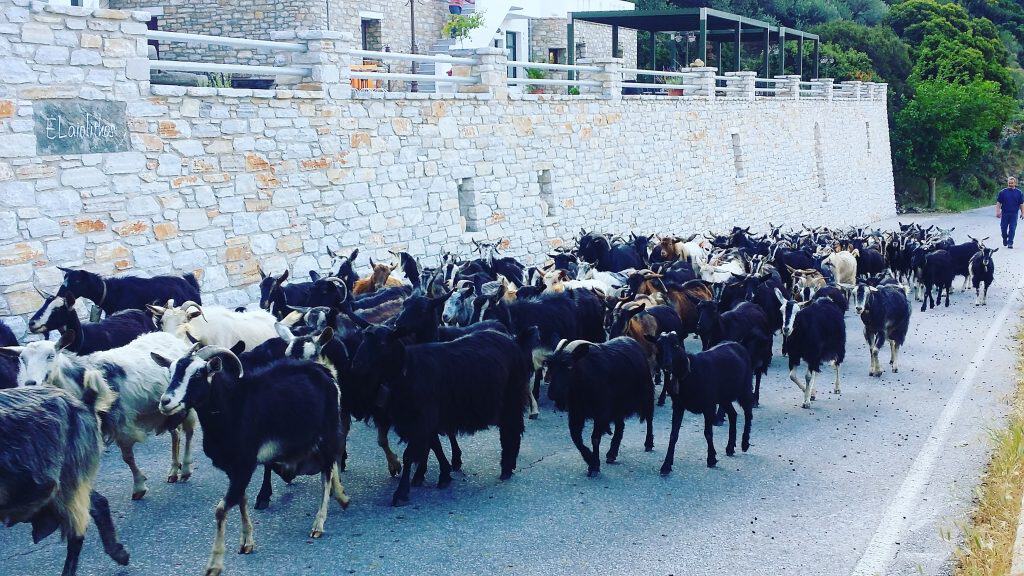
- Traditional Livestock Farming: Free-roaming goats and sheep graze along the rugged peaks, a timeless practice that provides the region with its world-famous Naxian cheeses and premium local goat and sheep meats.
- Wild Herbs & Flora (Εκατοντάδες Βότανα): The entire mountainous region is heavily blanketed with hundreds of species of aromatic wild herbs and vibrant wildflowers. The mountain breeze carries the natural therapeutic scents of wild sage, thyme, rosemary, and oregano, and wild fennel (μάραθο) everywhere you look.
Here, the landscape is not simply scenic. It is living land. The scent of wild herbs drifts through the air, goat bells echo across the hills, and village life continues at a pace defined by the seasons rather than by the tourist calendar. In this sense, the mountains are not just a backdrop; they are the island’s engine of life.
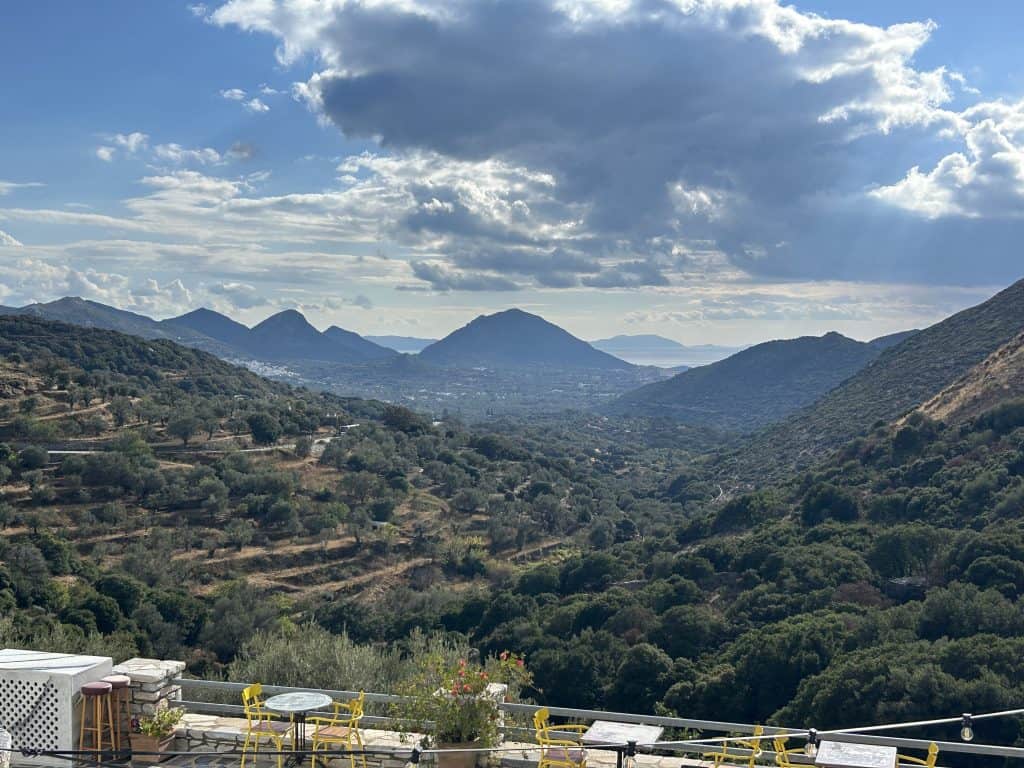
The Drymalia Valley — The Green Heart of the Cyclades
At the center of this mountainous landscape lies one of the most surprising places in the Cyclades: the Drymalia Valley.
Few travelers expect to encounter such a vast and fertile valley at this elevation. Yet Drymalia unfolds as the largest and most lush green valley not only in Naxos, but in the entire Cycladic island group. Its fertile soil has nourished generations of farmers, creating a landscape where agriculture remains deeply rooted in daily life.
Thousands of citrus and olive trees spread across the valley floor and climb the surrounding slopes, their silvery leaves moving gently in the mountain wind. During spring and early summer the valley becomes especially vibrant, its green fields contrasting dramatically with the rocky mountain ridges that frame it.
What makes Drymalia even more remarkable is its position. Situated high within the island’s interior, it forms the true center and agricultural heart of Naxos. From many points around the valley, the views stretch astonishingly far. Standing on the surrounding hillsides, the eye can travel across mountains, terraces, and villages before finally reaching the distant blue line of the Aegean Sea.
It is a landscape that surprises even seasoned travelers—proof that the Cyclades hold far more diversity than their postcard images suggest.
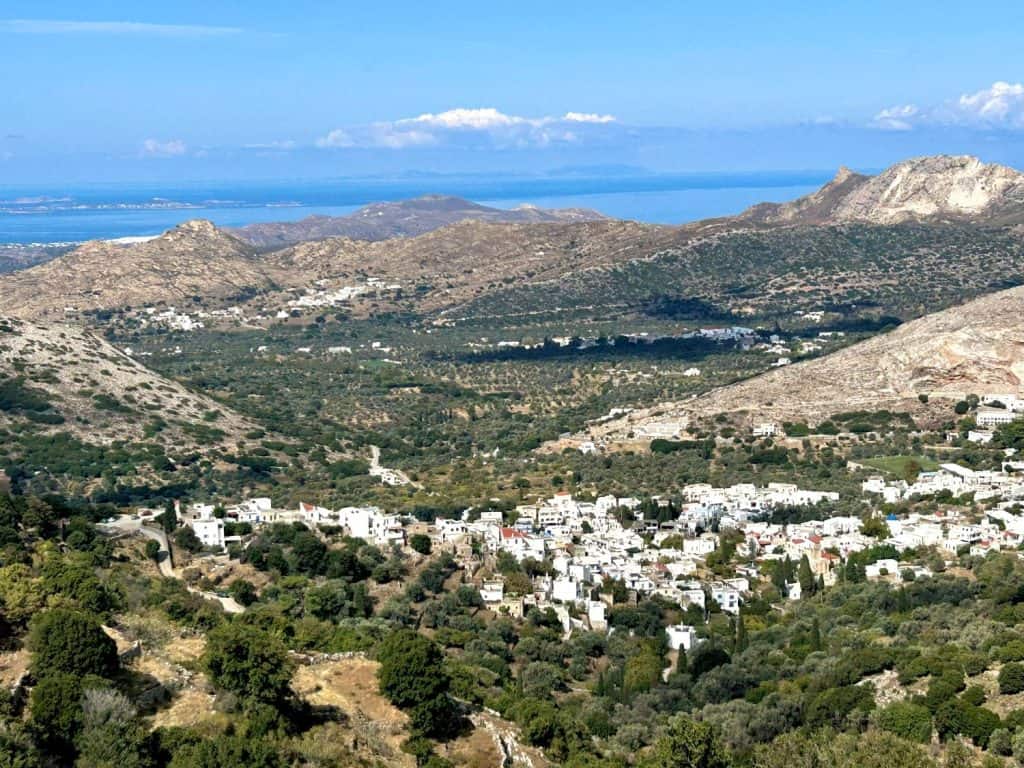
Villages That Still Belong to the Land
Scattered across the slopes are villages that have existed for hundreds of years—Filoti, Damarionas, Moni, Apeiranthos, Koronos, and others. Their narrow alleys twist between stone houses, small churches, and courtyards where conversations unfold slowly.
These villages were never designed for tourism. They were built for living—shaped by agriculture, family ties, and seasonal rhythms tied to the land. Because of this, they retain something increasingly rare in the Mediterranean: continuity.
You can still see farmers tending terraces, shepherds moving their flocks along ancient paths, and elders discussing village affairs beneath shaded trees. The daily routines of these places are not performances for visitors. They simply continue. For travelers willing to explore beyond the beaches, this creates a very different kind of encounter with the island—one that feels genuine rather than staged.
The Landscape of Movement
The mountains of Naxos also invite movement. Ancient footpaths connect village to village, weaving through valleys, fields, and hillsides. Some of these routes were once the primary roads of the island, used by farmers, traders, and shepherds long before modern transport arrived.
Today they form a network of hiking trails that reveal Naxos slowly and intimately. Walking these paths allows visitors to see how the island truly functions—how water moves through the land, how terraces shape the slopes, how villages relate to the surrounding terrain.
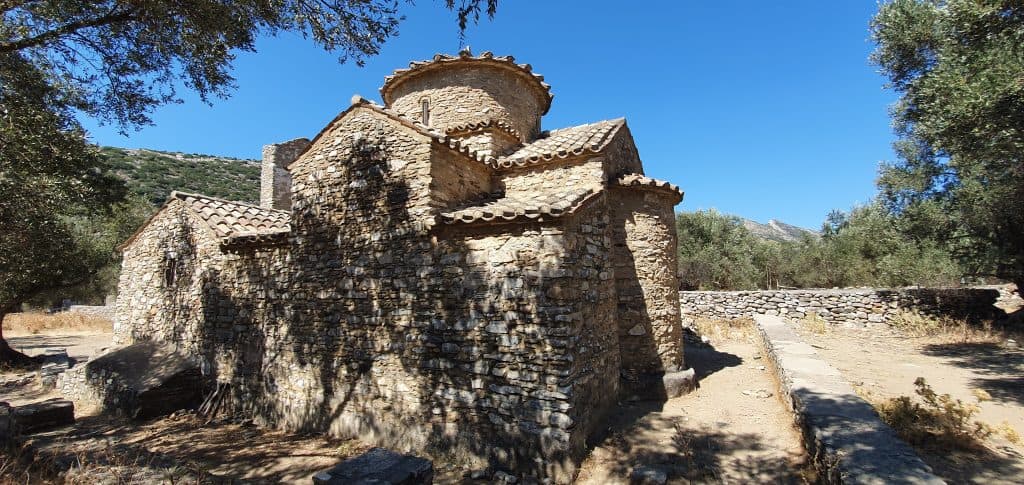
Along the way, travelers pass springs hidden among trees, small chapels perched on ridges, and fields where local families still cultivate crops as they have for generations. It is an experience that unfolds far from the noise of crowded beaches. The further one travels into the mountains, the more the island reveals its true character.
The Rise of Meaningful Travel
Across the world, travelers are increasingly seeking places where landscapes and communities still feel authentic. Crowded destinations and carefully constructed tourist environments no longer satisfy many visitors who now search for deeper connections with the places they explore—places where the landscape, the food, and the culture are not separated from one another.
Mountain Naxos answers this desire naturally.
Here, visitors do not simply observe local life from a distance—they encounter it directly through the food they taste, the villages they wander through, the landscapes they explore, and the people they meet along the way. Travel is shaped by the land itself: by ingredients grown nearby, by villages that remain vibrant communities, and by landscapes that invite discovery rather than spectacle.
The result is a form of travel that feels grounded and sincere. It is not about entertainment. It is about connection.
ELaiolithos: A Place Connected to the Land
Within this setting, places like ELaiolithos Eco-Luxury Resort occupy a unique position.
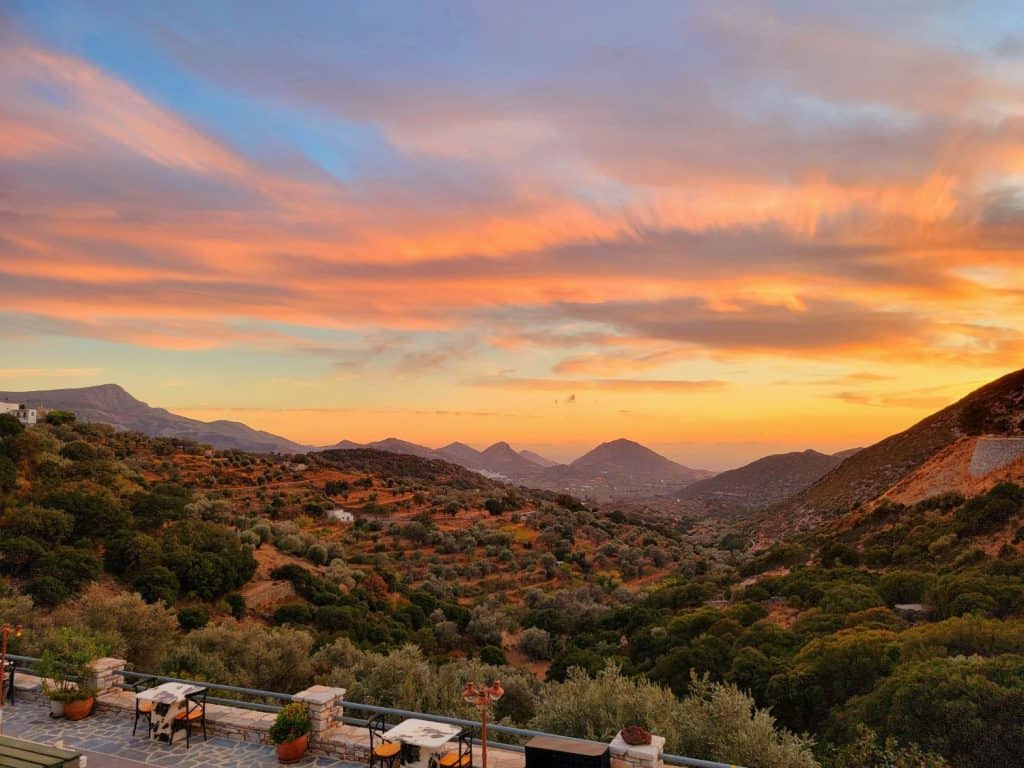
Located in the mountainous heart of the island, and overlooking the fertile Drymalia Valley, ELaiolithos does not attempt to recreate luxury through excess or spectacle. Instead, its philosophy reflects the surrounding landscape: rooted in simplicity, authenticity, and respect for the land.
- Fiercely Local Ingredients: Our ingredients are sourced strictly from nearby farms and family producers.
- Tradition Meets Creativity: Our food recipes draw inspiration from local traditions while allowing room for artistic culinary creativity.
- Immersive Experiences: We invite our guests to truly engage with the island—through authentic food, untouched nature, and genuine encounters with local culture.
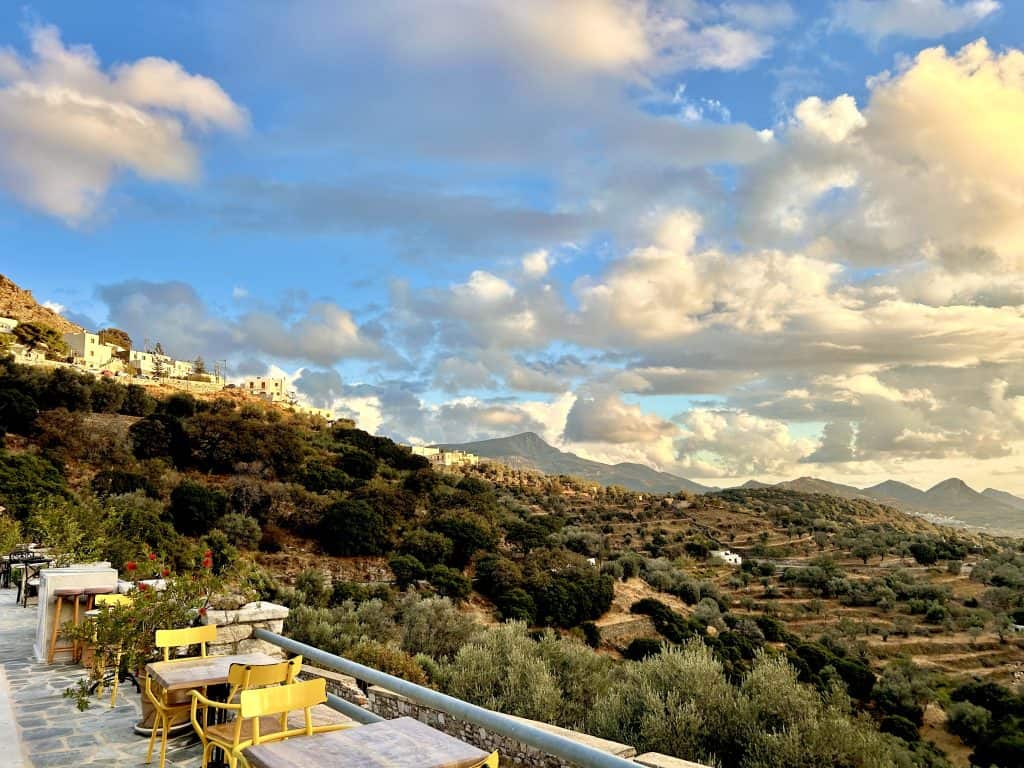
From the terraces of ELaiolithos, the views stretch across ancient olive groves, mountain ridges, deep ravines, and distant sea horizons—an ever-changing panorama that captures the absolute essence of the island’s interior.
The Future of the Island
As tourism continues to evolve, destinations that preserve their relationship with the land are likely to become increasingly valuable. Travelers are beginning to recognize that the most memorable journeys often occur not in places built solely for visitors, but in places where life continues in its own rhythm.
The mountains of Naxos quietly embody this possibility. They offer something increasingly rare in the Mediterranean: a landscape where agriculture, culture, and hospitality still intersect—where travelers can experience the island not only as a destination, but as a living environment shaped by centuries of human presence.
In this sense, the true treasure of Naxos may not lie along its coastlines at all. It lies in the mountains, where the island continues to breathe in its own timeless way.
For those willing to venture beyond the coastline, the island reveals its deepest character—quiet, fertile, and profoundly connected to nature.
In the mountains, Naxos tells its truest story.
Ready to discover a different side of Naxos?
Venture beyond the coastline and experience the island through its mountains, villages, traditions, and flavors. From the terraces of ELaiolithos, the landscapes of the Drymalia Valley unfold before you, offering a deeper connection to the land and the people who call it home.
Explore our accommodations and authentic experiences and discover Naxos from an entirely new perspective.