

Demeter Temple Naxos: Rooted in Land, Light, and Time
For travelers who move with intention, the Temple of Demeter offers more than history. It invites a slower way of seeing—one shaped by land, ritual, and continuity rather than distance covered or photos taken.
A Marble Masterpiece That Shaped Classical Greece
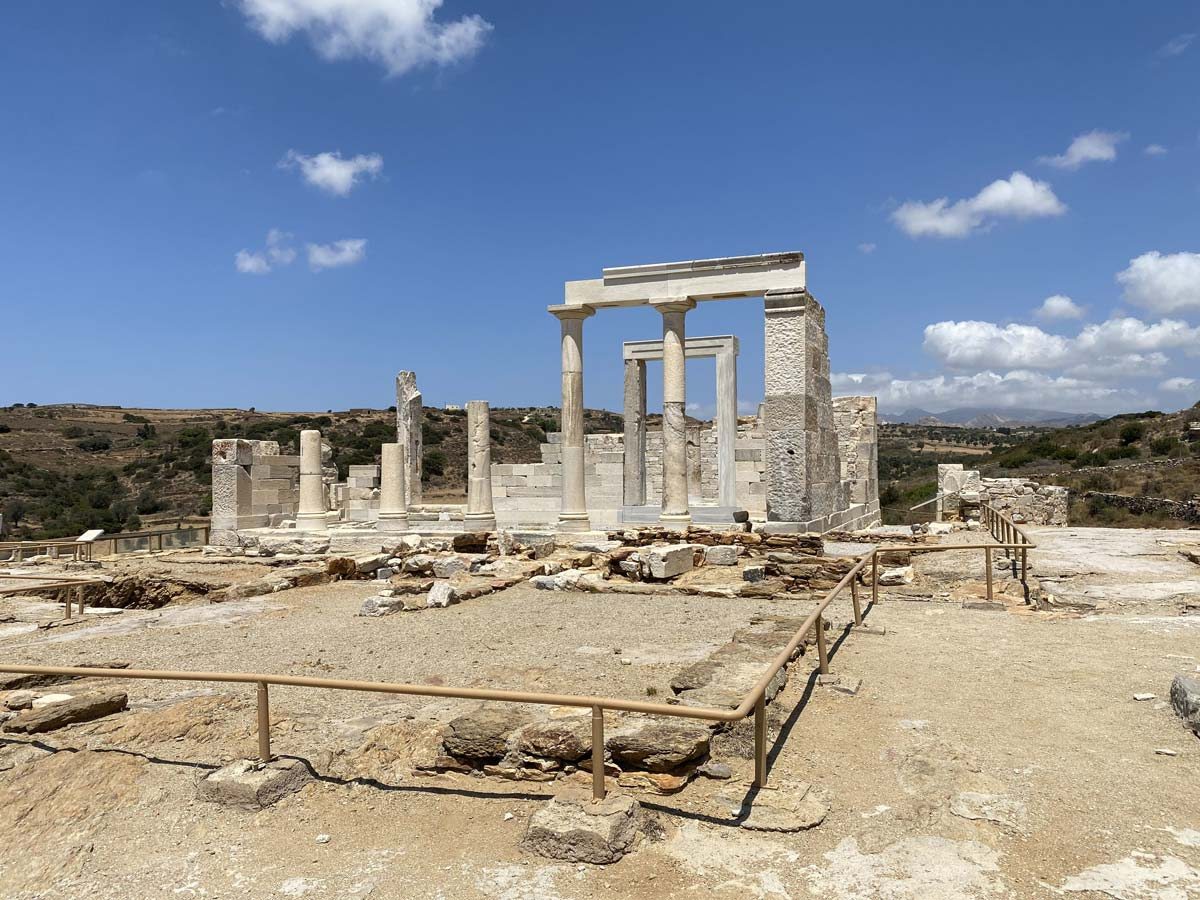
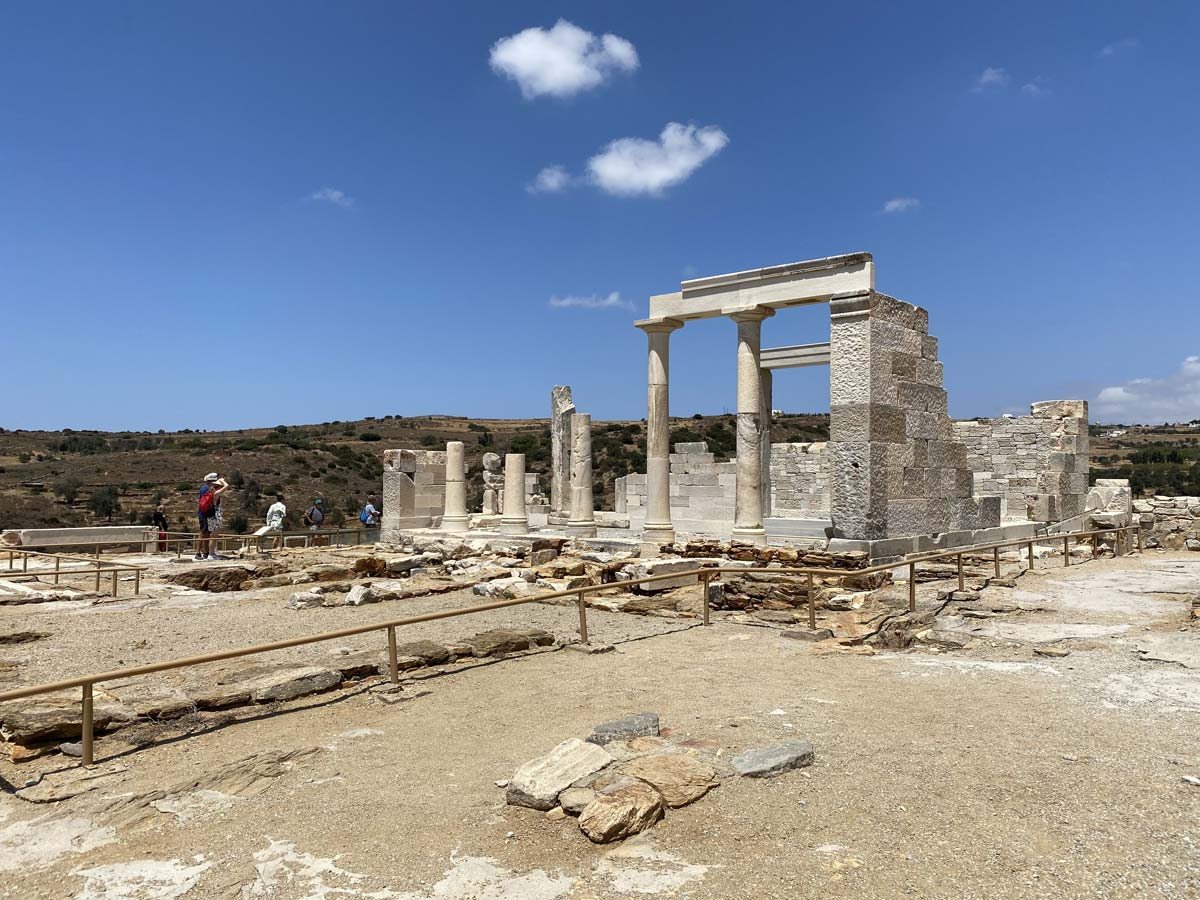
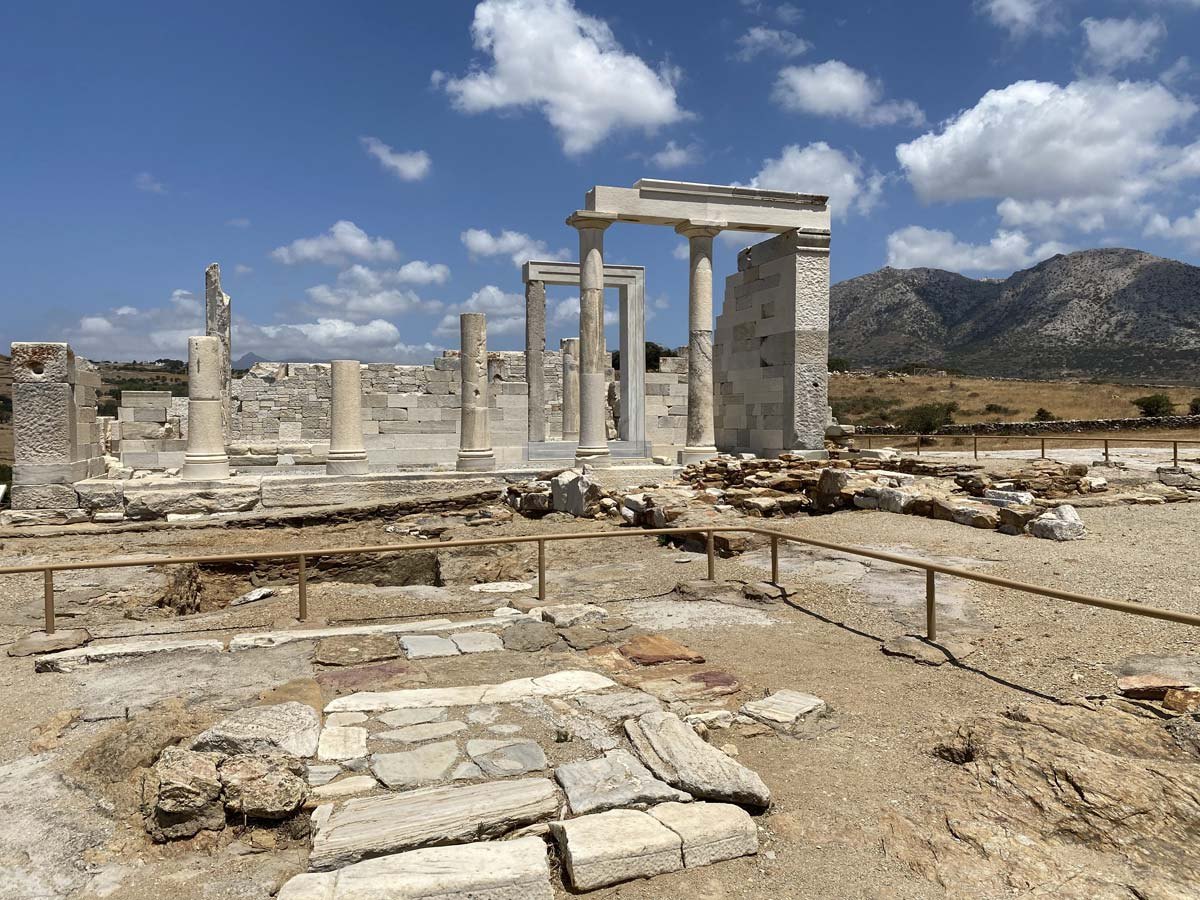
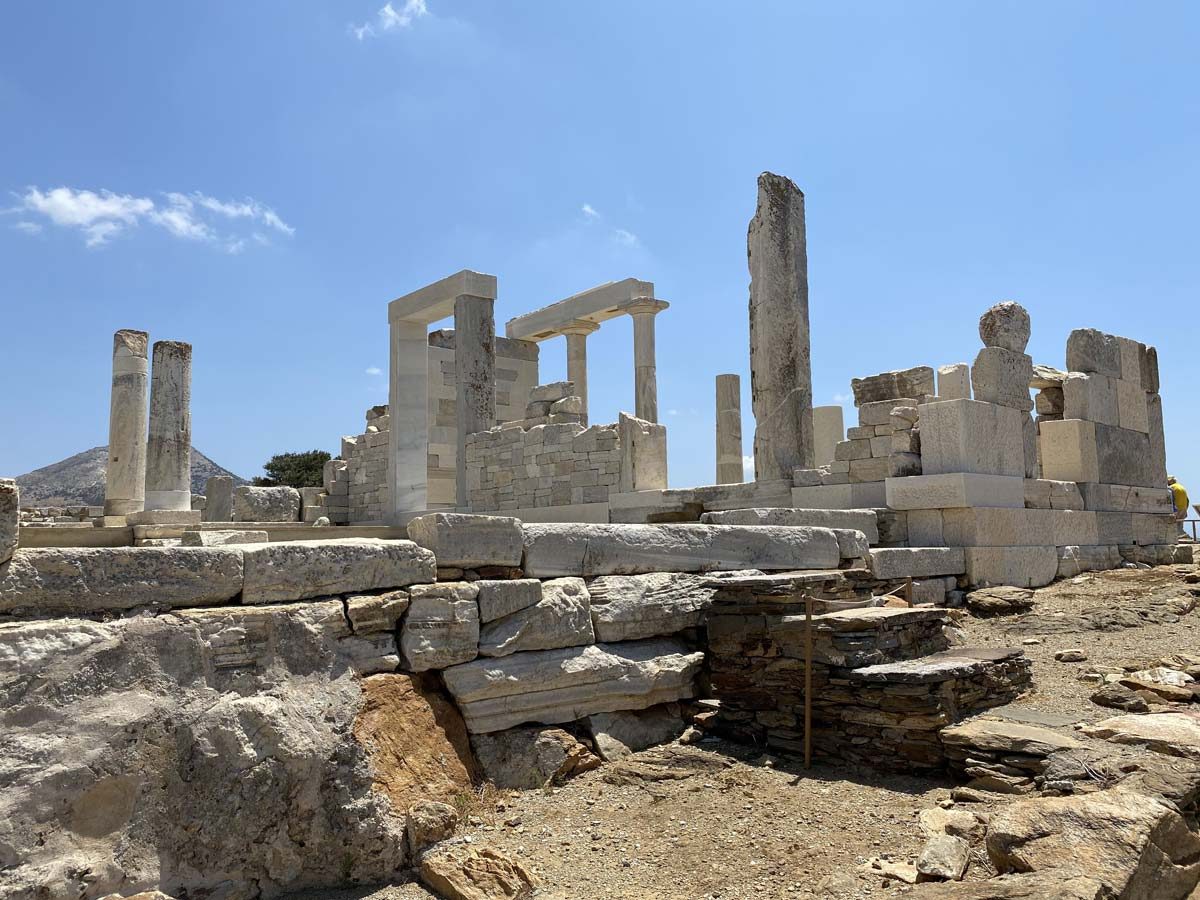
Just beyond the village of Sangri, Naxos reveals one of its most meaningful archaeological sites: the Temple of Demeter. Built around 530 B.C., the temple predates the Parthenon by nearly a century and is widely believed to have influenced its architectural form. Crafted entirely from fine local Naxian marble, its columns, inscriptions, and sculptural elements speak of a civilization deeply connected to land, ritual, and beauty.
Demeter—the goddess of harvest, grain, and fertility—was worshipped here alongside her daughter Persephone and the god Apollo. The setting itself explains why: rich fields stretch across the landscape, grounding the temple in the agricultural heart of the island.
Where Sacred Architecture Meets Fertile Fields
The Temple of Demeter stands in quiet harmony with its surroundings. Designed as an open-air place of worship, it reflects a time when spirituality, land, and daily life were inseparable. Light moves freely across marble surfaces, and the rhythm of the land becomes part of the experience—an echo of ancient Naxian life shaped by seasons, cultivation, and care.
The Giroulas Museum Encounter
Fragments of History Preserved in Quiet Detail. A short walk from the temple, the Giroulas Museum completes the visit. Here, fragments of sculptures, marble votives, and a thoughtful reconstruction of the temple’s original three-winged basilica offer deeper insight into its form and function.
Set gently into the landscape, the site has received international recognition for its sensitive integration with the natural environment—an approach that mirrors the values of the ancient builders themselves.
From the hilltop, the view opens onto a fertile valley below, calm and expansive, reinforcing the connection between architecture, land, and time.
Why the Demeter Temple Speaks to Intentional Travelers
The Temple of Demeter is not a place to rush through. Its power lies in stillness—in how light moves across marble, how fields stretch quietly below, and how little has been altered by time.
For travelers seeking meaning rather than momentum, this site reflects a way of moving through the world with awareness: honoring what came before, staying present, and allowing place to shape the experience.
Visit the Demeter Temple in Naxos
Location & Access
The temple is accessible by car, with the final kilometer following a scenic dirt road. It is located 11 km from ELaiolithos and approximately 15 km from Naxos town and port, making it an easy and rewarding cultural stop inland.
Opening Hours & Entrance
– Temple entrance: Free
– Giroulas Museum: €4
– Open daily except Tuesdays, from 8:30 a.m. to 3:00 p.m.
A Natural Continuation of the Journey
From Ancient Rituals to Modern Slow Living
The values that shaped the Temple of Demeter—respect for land, seasonal rhythms, and human-scale living—still exist inland. Just 15 minutes away, ELaiolithos continues this philosophy in a contemporary way.
Here, travel slows naturally. Food is shaped by local harvests, experiences unfold without urgency, time is treated as something to be felt rather than filled, and the journey deepens beyond the landmark itself.
Experience Naxos Beyond the Landmarks at ELaiolithos
This is Naxos for travelers who choose depth over speed, and presence over performance.
Some places are meant to be visited.
Others ask to be lived—slowly, and with care.