

Where Threads Tell Stories: The Loom Weaving Tradition of Naxos
In Naxos, tradition is not displayed behind glass — it is lived.
Your visit to the island cannot be considered complete without stepping into one of its remarkable handloom weaving workshops. Naxos remains one of the few places in Greece where the ancient art of loom weaving is still alive, carried forward by the gifted hands of its women.
For generations, Naxian women have transformed simple threads into textiles of beauty, strength, and purpose. What began in antiquity continues today as both art and expression — a practice passed from mother to daughter, woven with patience, discipline, and devotion.
In Naxian culture, loom weaving is more than craftsmanship. It is creation. It is identity. It is memory woven into fabric.
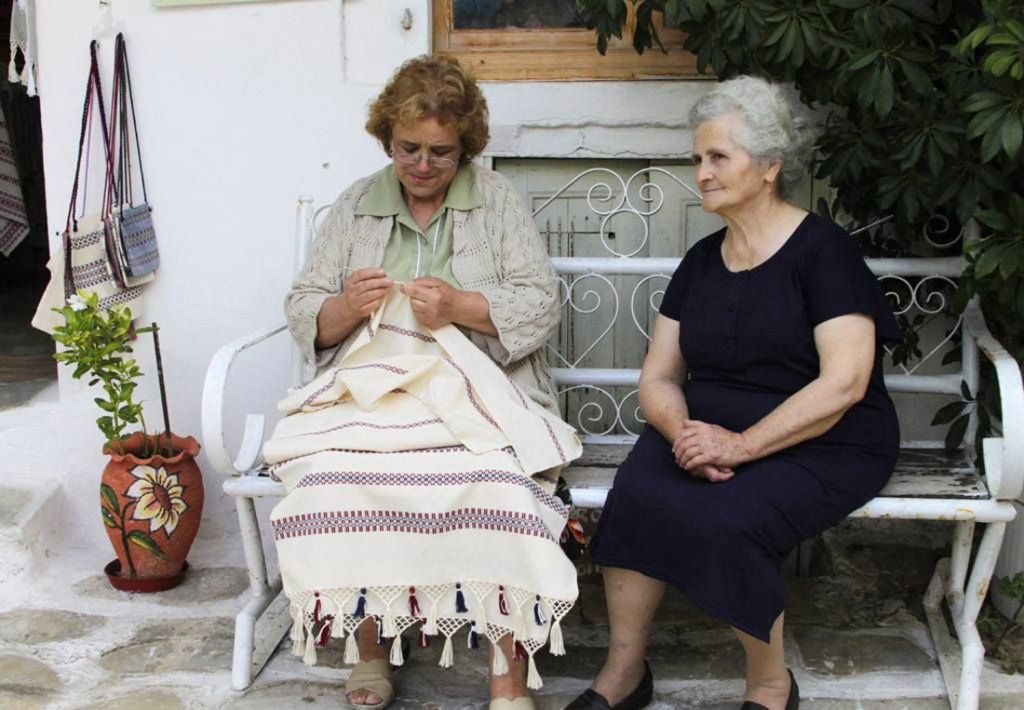
While much of the world has abandoned slow, organic textile processes in favor of mass production, the women of Moni and Apeiranthos continue this demanding and intricate art. Their looms still move rhythmically, producing handmade pieces that carry both heritage and innovation.
Traditional loom weaving is pure art — shaped by time, guided by hand, and rooted deeply in the soul of Naxos.
An art that romanticizes the handmade….
Traveling to Naxos is a joy. Naxos is rustic, historic, and full of intrigue. What more could you want from a place? Buying a handmade Greek loom weaving textile is something worth bringing home and something worth supporting….because you support the local community, you support these women, and you’ll have a handmade artistic creation that not only romanticizes the pre-industrial life, but also offers in a way, a return to our childhood.
One of the most unique experiences and a must thing to see for anyone in Naxos is a visit to a Workshop-Exhibition of the hand loom weaving – a tradition that is still alive to present day and it is of extraordinary beauty, quality and technique expertise.
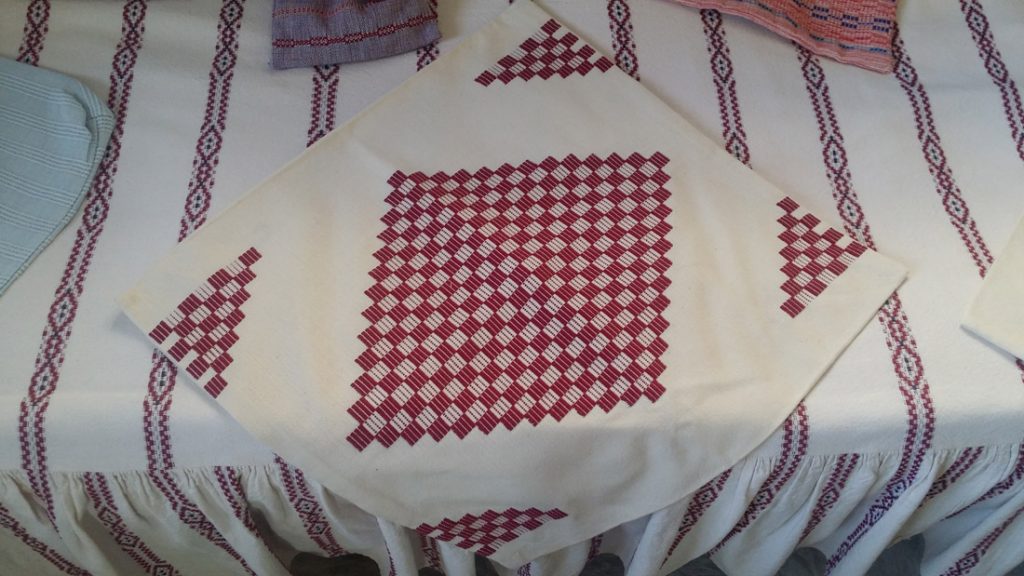
All of the textiles are handwoven and hand-embroidered and reflect the highest standard in artisan excellence. The structure of the weave and the visual appearance of the fibers collectively reflect the superior quality of these textiles. Each textile features individual yarns and varying patterns woven with intricate cohesion.
Loom Weaving Workshop-Exhibitions
- In Chalkio village
- in Moni Vilalge
- in Apeiranthos village
What is a loom?
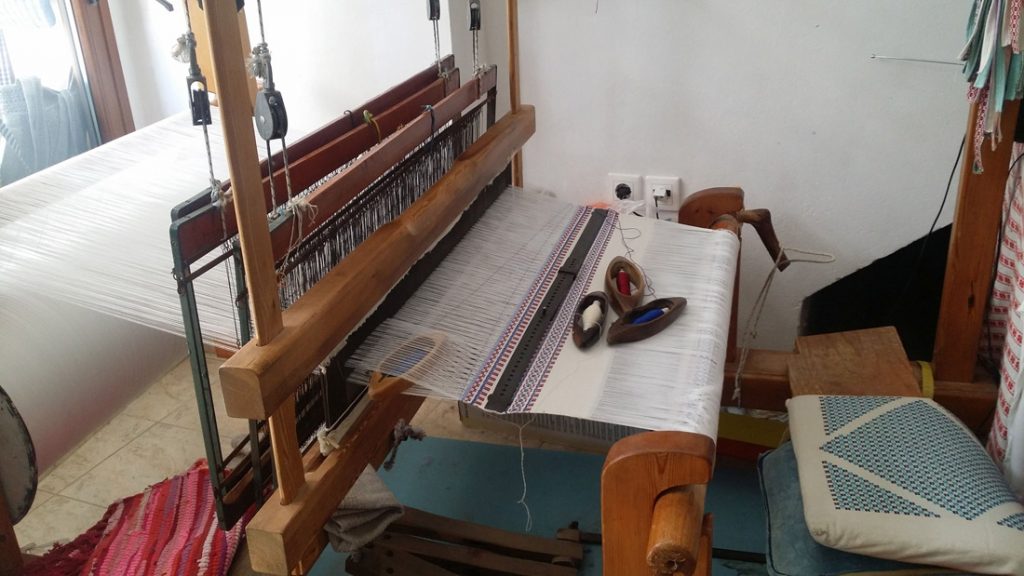
A hand loom is a wooden machine used in Greece since Homer’s era for weaving fabrics. The basic purpose of any loom is to hold the longitudinal warp threads in place and under tension to facilitate the interweaving, the filling of the weft threads. The precise shape of the loom and its mechanics may vary, but the basic function is the same.Different textures or patterns are created if the method of the weave is changed.
The handloom is a machine 100% hand curved by a local skillful wood craftsman. There are looms of many sizes, types, and degrees of complexity. Most looms are operated with treadles or levers. In a wooden vertical-shaft loom, the heddles are fixed in place in the shaft. The warp threads pass alternately through a heddle, and through a space between the heddles (the shed), so that raising the shaft raises half the threads (those passing through the heddles), and lowering the shaft lowers the same threads — the threads passing through the spaces between the heddles remain in place.
Loom weaving is among the most sophisticated and time consuming jobs in the world.
It’s is an extremely long repetitive process which requires a great deal of patience, and focused attention, it’s creative, and it’s very rewarding at the end when the creations are completed. When you weave, you bring together different yarns, fabrics and colors, and unify them in a single, unique artifact. You can make clothes, accessories, and home décor items, in cotton fibers from plain to fancy and elaborate. The raw material used is pure 100% Greek cotton and also silk – all are entirely natural products and come primarily from northern Greece.
Hand Loom Weaving Tradition and ELaiolithos
At ELaiolithos, tradition is not decorative — it is personal.
Supporting the loom weaving heritage of Naxos is not simply a gesture of admiration. It is part of the identity of the house itself. Sustainability here is not a trend, but a continuation of what the island has always practiced: respect for craft, for patience, for the handmade.
Every suite carries this story within its walls.
The textiles you will touch — the woven throws resting on the stone beds, the table runners, the curtains, the carefully placed details — are all created by the owner’s mother, Maria Marakis. A woman with more than 65 years of experience at the loom, she began weaving at the age of fifteen and has never stopped.
Her hands have memorized the rhythm of the shuttle.
Her eyes know every tension of the thread.
Her work carries decades of discipline, innovation, and quiet devotion.
Founder of the Women’s Weavers Association of Moni village, Maria has dedicated her life to preserving and teaching this art so it would not disappear. What you see inside each suite is not simply textile design — it is lineage. It is continuity. It is the living thread between generations.
ELaiolithos actively supports this tradition by:
- Offering handloom weaving classes for guests who wish to experience the art firsthand
- Promoting and collaborating with local women weavers of Moni and Apeiranthos
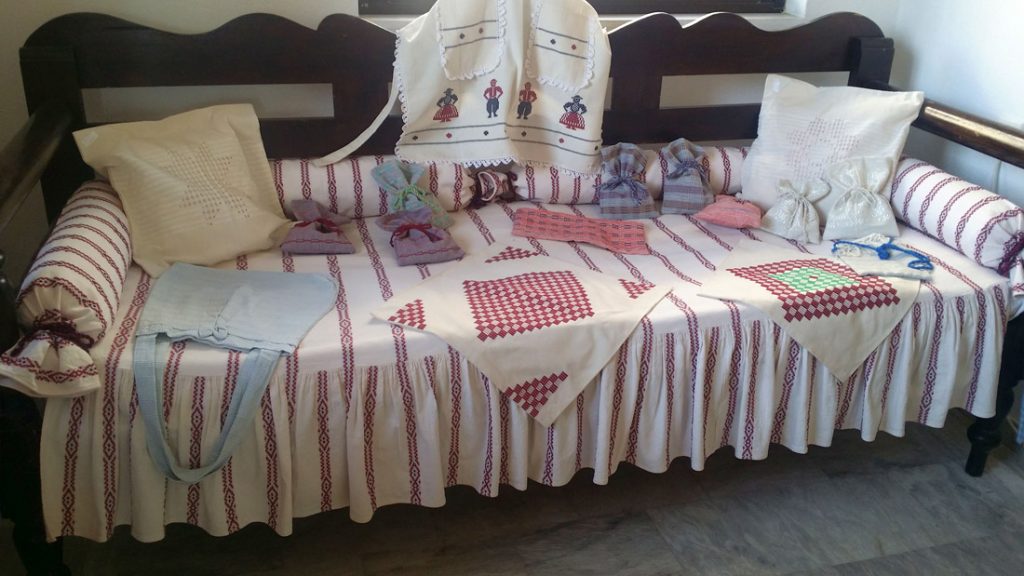
- Showcasing authentic handwoven creations at the premises
- Choosing exclusively handmade, locally produced textiles throughout the property
Here, nothing is industrial. Nothing is anonymous.
Guests are invited not only to observe the loom weaving tradition, but to sit at the loom, to understand the discipline behind it, and to feel the quiet satisfaction of creating something with their own hands.
To stay here is to be surrounded by threads that carry history — woven slowly, intentionally, and sustainably.
If you would like to participate in a traditional handloom weaving class during your stay, you are warmly invited to contact us for details and availability.
Moni Village and the Living Loom Tradition
In the heart of Moni, heritage is not remembered — it is practiced daily.
This small mountain village, with approximately 200 permanent residents, is widely known for its enduring handloom weaving culture. For generations, the women of Moni have woven garments, household textiles, and ceremonial pieces for everyday life. Today, several workshop-exhibitions open their doors to visitors, revealing wooden looms in motion and shelves filled with handmade creations.
What makes Moni remarkable is not only its history, but its continuity. Even younger women have embraced the craft, ensuring that the rhythm of the loom remains part of village life. Nearly every household still holds at least one loom — locally called krevataria — a quiet testament to how deeply this art is rooted in the community.
Among the most influential figures in preserving this tradition is Maria Marakis, founder and longtime president of the Moni Weavers Association of Women. Weaving since 1960, after learning the craft at the age of fifteen, she dedicated her life not only to mastering the loom but to teaching it.
Her mission was clear: to pass knowledge forward, to empower the women of her village and neighboring communities, and to allow the art to evolve rather than fade.
With decades of experience, Maria blends discipline with creativity. Her pieces are known for intricate embroidery, balanced compositions, and thoughtful innovation — always respecting tradition while responding to contemporary aesthetics.
In Moni, the loom is not a relic.
It is a living instrument of identity, resilience, and artistic expression.
“ it’s a magical feeling to create something entirely new on an old loom.
For me, weaving is not simply a skill — it is a ritual of love.
Every piece carries patience, discipline, and something that comes directly from my heart.”
— Maria Marakis
Today, Maria maintains her own Exhibition–Workshop in Chalkio, where visitors can explore an extensive collection of handwoven textiles and distinctive artisan creations.
Her daughter and daughter-in-law also run their own shops in Chalkio, each expressing the loom tradition through their individual aesthetic and contemporary interpretations.
Greek Loom Weaving Tradition
From the quiet workshops of Chalkio, the story of weaving stretches far beyond the island and deep into the origins of Greek civilization.
The art of weaving dates back nearly 8,000 years. Spinning came first, and weaving followed — evolving into one of the most essential skills of early societies. By 5000 BC, flax was already being woven into fabric. Over time, the loom became an integral presence in Greek households, shaping both daily life and cultural identity.
In ancient Greece, weaving was never considered a simple domestic activity. It was an act of meaning.
In Homer’s Iliad, Helen is depicted at her loom — a symbol of discipline, concentration, and inner strength. The loom represents order in contrast to the chaos of war.
Greek mythology goes even further. The three Moirae — the Fates — were believed to govern human destiny through thread itself. Clotho spun the thread of life. Lachesis measured its length. Atropos cut it. Life was imagined as something woven, fragile yet deliberate.
In Republic, Plato reflects on this symbolic weaving of existence. Even Ariadne’s thread guided Theseus safely through the labyrinth — a simple strand becoming salvation.
Thread was never merely material.
It was time. It was destiny. It was continuity.
Across centuries, weaving remained primarily in the hands of women. It required patience, precision, rhythm, and deep concentration. The loom demanded both physical endurance and mental clarity — a balance of strength and sensitivity.
Today, much of this slow, organic textile process has been overshadowed by industrial production and mass importation. Yet in places like Naxos, the tradition continues — not as nostalgia, but as living culture.
The Greek loom is more than a wooden structure holding warp and weft together.
It is a vessel of memory.
A language without words.
A bridge between generations.
And as long as hands continue to guide the shuttle through thread, this ancient art will remain alive.
Why Choose a Handwoven Artifact from Naxos
To purchase a handloom woven piece from Naxos is not simply to buy an object.
It is to carry a story home with you.
Each textile is woven entirely by hand using 100% Greek cotton — a natural, breathable, and enduring material deeply connected to the land itself. The process is slow and deliberate. No industrial production. No synthetic blends. Only wood, cotton thread, rhythm, and human skill.
Every woven piece carries an invisible signature of authenticity. Slight variations in pattern and texture are not imperfections — they are the living proof of craftsmanship. No two creations are ever identical.
These textiles are designed to be lived with. A table runner that gathers family moments. A scarf that softens with time. Curtains that filter the sunlight in shades of blue and red — traditional Naxian colors — and blue and white, echoing the Cycladic sky.
Choosing a locally woven artifact also means choosing sustainability. The cotton is Greek. The weaving is done on the island. The production remains small-scale and responsible. The environmental footprint is minimal, and the origin of each piece is known.
Most importantly, your choice supports the future of this craft. It encourages younger generations to continue learning the loom and to carry forward a tradition that has shaped Naxian identity for centuries.
To bring home a woven piece from Naxos is to bring home heritage — patiently woven, thread by thread. sky.
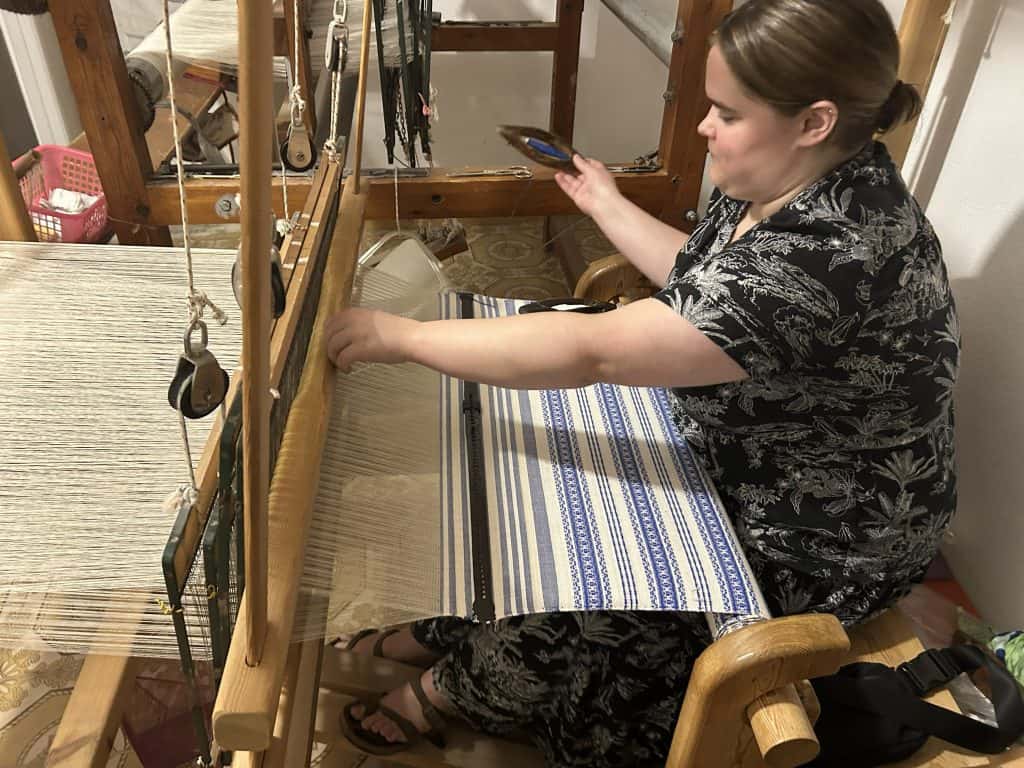
What is weaving used for?
Weaving is a dialogue between human hands and the natural world.
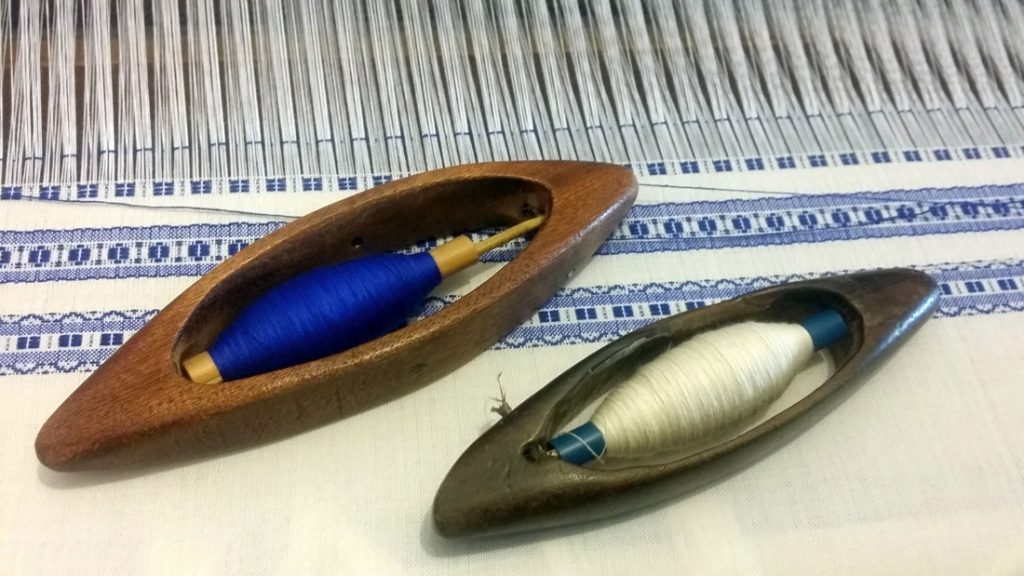
It is an art born from simple elements — wood, cotton, thread, light, patience. The loom itself, carved from timber by skilled craftsmen, is a work of art before the first thread is even placed upon it. Shuttles, frames, heddles — each tool carries its own quiet beauty.
Textiles created on the loom are not ornamental luxuries. They are woven for life.
From tablecloths and runners to aprons and rugs, from wedding veils to curtains, from hand towels to shawls, sofa throws, and place mats — woven pieces accompany daily rituals. They soften a home. They filter sunlight. They frame gatherings. They absorb memory.
A handwoven textile resting on a bed, a wooden chest, or beside a window does more than decorate a space. It brings warmth, texture, and a sense of continuity. When sunlight touches cotton threads, the fabric seems to breathe — dignified, alive, grounded.
Weaving surrounds us quietly, just as housing, food, and water do — essential, enduring, human.
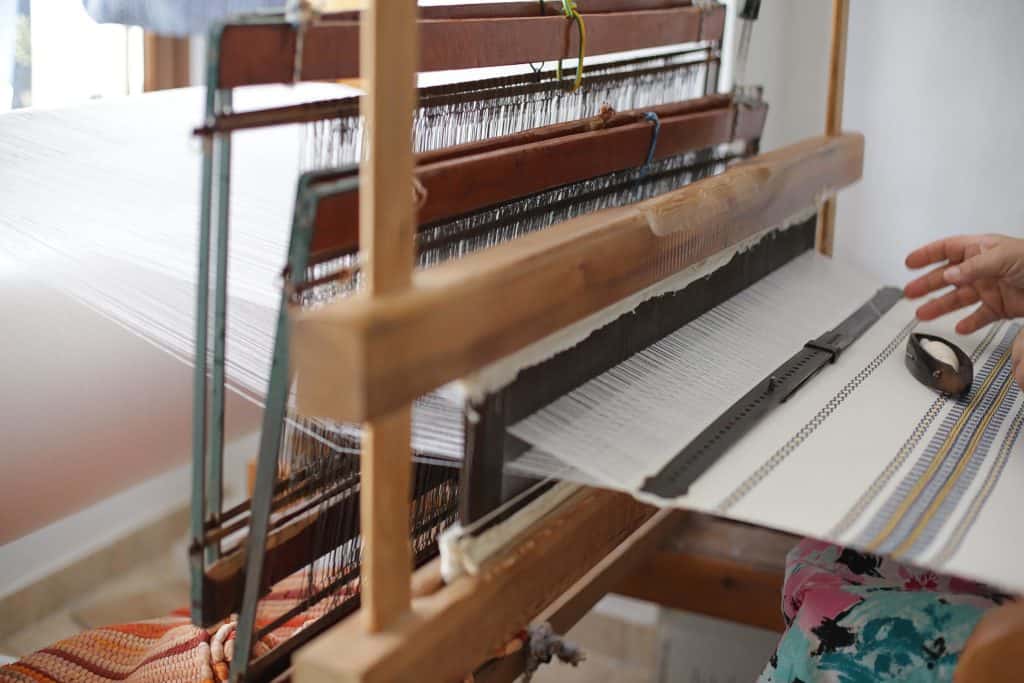
What Is the Common Material Used in Weaving?
Cotton is often called the queen of textiles for its simplicity, strength, and natural comfort.
In Naxos, weaving traditionally relies on 100% Greek cotton — breathable, durable, and entirely natural. Its purity allows patterns and textures to emerge clearly, whether in monochrome compositions or intricate multicolored designs.
At times, cotton is combined with silk to create refined traditional yfada — distinctive weaving styles that enrich the artistic language of Moni and the wider Naxian heritage.
In earlier generations, wool was also widely used, particularly for blankets and heavier household textiles. Today, however, wool is increasingly rare, and cotton remains the primary material sustaining this craft.
Natural fibers. Natural rhythm.
An art that remains close to the earth.
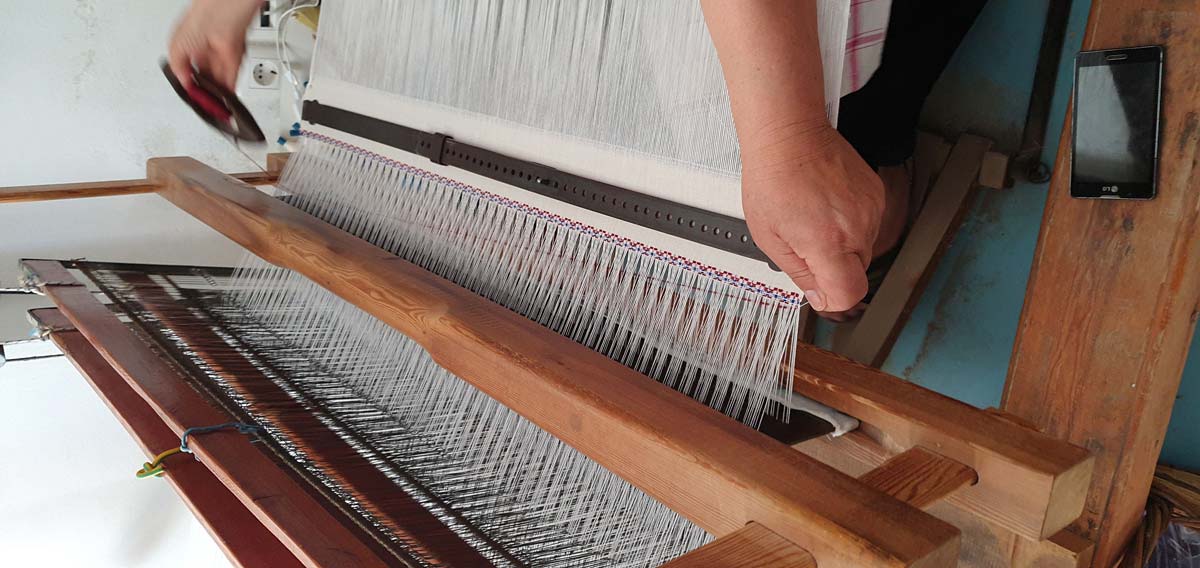
Working on a loom has always been a demanding and disciplined practice.
Ancient weavers approached the loom with calm concentration. Both mind and body had to be aligned. The process required continuous counting, precise rhythm, and physical endurance. The movements — pressing treadles, lifting shafts, throwing the shuttle — engaged the entire body. It was not a task one could perform carelessly or endlessly; even the most experienced weaver could not work beyond several focused hours without fatigue.
Every stage demanded attention.
The shuttle had to pass cleanly through the shed.
The tension of the warp had to remain steady.
The beat had to be even and deliberate.
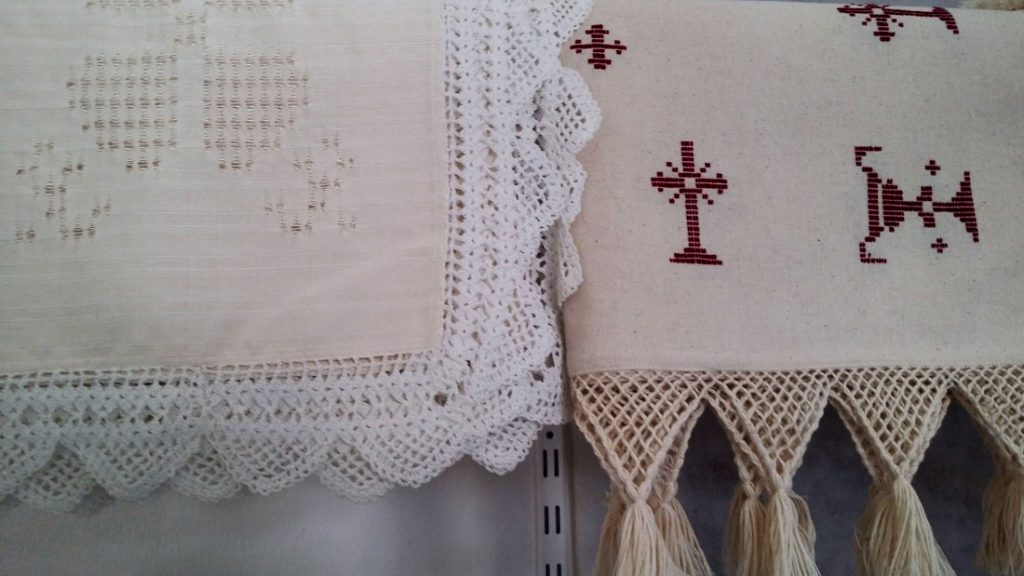
Calculating the correct length of thread, adjusting alignment, preparing the loom, and finishing the textile with trims or fringes required both technical knowledge and intuition. The weaver had to understand fibers, colors, density, and pattern structure — how different threads would interact, how textures would form, how a design would emerge row by row.
Weaving is repetitive, yet never mechanical.
It is structured, yet creative.
A single broken thread can interrupt the entire process. Harmony between warp and weft is essential; without it, the fabric cannot exist.
For the ancients — as for the women of Naxos today — weaving was an exercise in patience, endurance, and devotion. Each finished textile carried within it hours of rhythm, silence, and unwavering attention.
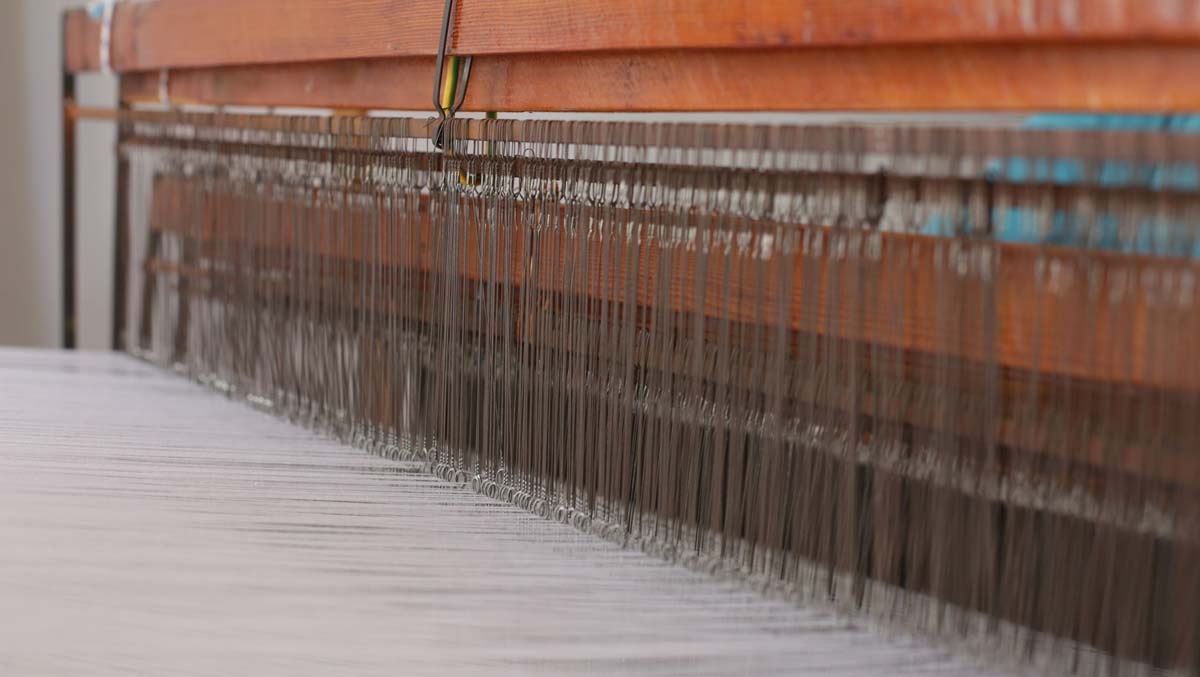
And perhaps the most meaningful way to understand this tradition is not only to observe it — but to sit before the loom yourself.
To feel the wooden frame beneath your hands.
To hear the rhythm of the shuttle.
To count the threads.
To witness how patience slowly becomes fabric.
A traditional handloom weaving class at ELaiolithos is not simply an activity. It is a return to slowness. A reconnection with the handmade. A quiet reminder that beauty requires time.
If you wish to experience this living art personally, you are warmly invited to join a traditional weaving class and become, even for a few hours, part of a story that has been woven for centuries.
Because in Naxos, threads do more than create textiles.
They connect generations.

About the Author
Eleni is the owner of ELaiolithos and the voice behind its stories.
This article was written after extensive research and, most importantly, after many hours of conversation with her mother — a master weaver with more than six decades of experience at the loom. Sitting beside her, listening to the rhythm of memory, Eleni gathered not only historical knowledge, but lived wisdom passed down through generations.
Raised among threads, wooden looms, and the discipline of handmade creation, she grew up witnessing the patience, strength, and artistry required to keep this tradition alive.
For Eleni, loom weaving is not simply cultural heritage — it is family history. It is identity. It is continuity.
Through her writing, she hopes to preserve and share the living traditions of Naxos with travelers who seek depth, meaning, and connection.